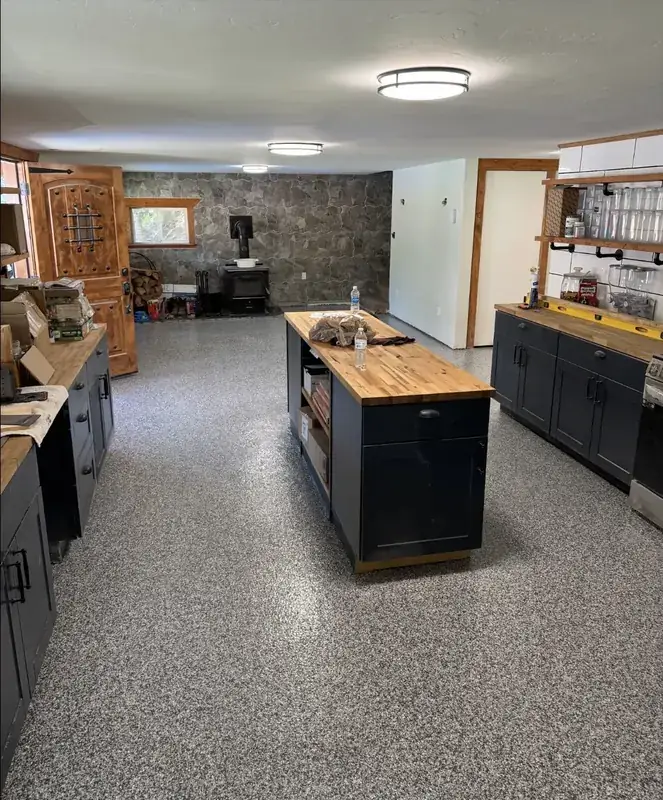
Polyaspartic floor coatings vs epoxy
Rhino Coatings installs polyaspartic floor coatings in Coeur d'Alene, Spokane and Boise: a polyurea base coat and a polyaspartic top coat over diamond-ground concrete, installed in one day on most floors, with a lifetime warranty. If you searched for epoxy flooring or an epoxy garage floor, or have an epoxy quote in hand, this page explains why we install polyaspartic instead.
Polyaspartic floor coatings at a glance
- Base coat
- Polyurea
- Top coat
- Polyaspartic, UV-stable
- Epoxy
- We install polyaspartic, not epoxy
- Walk on
- About 8 hours
- Drive on
- About 72 hours
- Colors
- 13 flake blends and 1,700+ silica colors
Is polyaspartic better than epoxy for a garage floor?
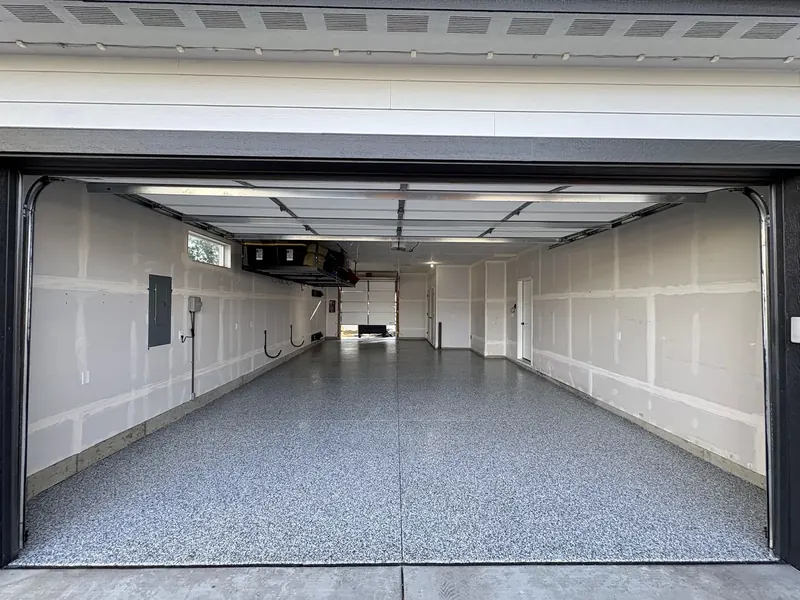
For most garage floors, yes. A polyaspartic top coat is UV-stable, so it does not yellow in sunlight the way epoxy does. It stays flexible through freeze-thaw, and it is a more abrasion-resistant top coat than epoxy. It also cures fast: walk on it in about 8 hours and drive on it in about 72, so most floors are a one-day install. Rhino Coatings installs polyaspartic, not epoxy.
- One-day install: walk on it in about 8 hours, drive on it in about 72
- UV-stable: won't yellow in sunlit garages or patios
- Flexible: survives freeze-thaw cycles without cracking the bond
- Abrasion-resistant: a more abrasion-resistant top coat than standard epoxy
| Property | Polyaspartic | Standard epoxy |
|---|---|---|
| Install | One day on most floors | Can take several days |
| Walk on | About 8 hours | Depends on the product and the temperature |
| Drive on | About 72 hours | Depends on the product and the temperature |
| UV stability | UV-stable, does not yellow in sunlight | Yellows in sunlight |
| Freeze-thaw flexibility | Flexible bond, survives cycles | Brittle, prone to delamination |
| Abrasion resistance | More abrasion-resistant top coat | Less abrasion-resistant top coat |
| Hot-tire pickup | Resists it, and the lifetime warranty covers it | A known failure point, especially thin or DIY coats |
| Prep | Diamond grinding | Varies by installer; DIY kits usually rely on acid etching |
Rhino Coatings installs polyaspartic over a polyurea base, not epoxy.
Why we put a polyurea base coat under a polyaspartic top coat
Each layer does the job it is best at. Polyurea is flexible and fast-setting, so the base coat bonds into the diamond-ground concrete, stays flexible through freeze-thaw and holds the flake or silica broadcast in place. Polyaspartic is UV-stable, so the top coat does not yellow in sunlight, and it gives the floor its more abrasion-resistant top surface.
Every floor we coat gets both layers, whether the finish is flake or silica, and every one carries the same lifetime warranty against peeling, delamination and hot-tire pickup.
When an epoxy floor can make sense
Epoxy is a proven coating, and it can suit an indoor floor that never sees sunlight or hot tires. We do not install it, so if epoxy is what you want, we are not the right call. If your floor sees sun through an open door, hot tires or freeze-thaw, the table above shows why we install polyaspartic instead.
Looking for an epoxy floor installer?
Most people who search for an epoxy floor installer or an epoxy garage floor contractor want the same result: a hard, glossy floor that wipes clean, put down by a professional crew instead of a weekend kit. That is the job we do in Coeur d'Alene, Spokane and Boise, with one difference we tell you up front: we install polyaspartic, not epoxy.
You get the same kind of professional install, diamond-ground prep, crack repair and a flake or silica finish, with a top coat that does not yellow and a floor you can walk on in about 8 hours. Every floor carries a lifetime warranty against peeling, delamination and hot-tire pickup, with a fixed, written price after a free on-site measure.
Get a free floor coating quote, or see our garage floor coatings.
Flake vs silica floor finishes
Both finishes go over the same polyurea base coat and polyaspartic top coat. Flake is the usual choice for a dry garage or basement where the look matters most. Silica grips better when wet, so we recommend it for patios, walkways, pool decks and floors that get wet often.
| Finish | Flake | Silica |
|---|---|---|
| Look | Multi-color vinyl flake that hides dust and tire marks | A solid, paint-matched color with a silica texture |
| Colors | 13 flake blends | 1,700+ Sherwin-Williams colors |
| Grip when wet | Some grip | Better grip when wet |
| Best for | Dry garages, basements and shops | Patios, walkways, pool decks and floors that get wet often |
| Base and top coat | Polyurea base coat, polyaspartic top coat | The same polyurea base coat and polyaspartic top coat |
13 flake floor blends
Decorative vinyl flake broadcast systems: durable, slip-resistant, and well suited to garages, shops, and commercial spaces. Every blend includes a slip-resistant polyaspartic top coat.

Tan, gray, black and white.

Beige, gray, white and brown.

Black, white and gray.

Light gray, dark gray and white.

Beige, brown, red and black.

Dark gray, light gray, black and white.

Blue, gray, black and white.

Beige, brown, tan and black.

Light gray, dark gray, black and white.

Blue-gray, light gray, white and deep gray.

Beige, cream, brown and black.

Slate gray, charcoal, white and silver.

Slate grays from light to charcoal, with white.
1,700+ silica colors
Sherwin-Williams paint-matched silica systems: a smooth, professional finish ideal for showrooms, offices, and garages after a refined aesthetic. If they make the color, we can coat your floor with it.

Deep espresso brown.

Warm cedar brown.

Red-brown clay.

Chocolate taupe.

Soft clay terracotta.

Warm greige taupe.

Earthy terracotta orange.

Olive-tinged gray.

Cool pearl-slate gray.

Warm sand tan.

Cobblestone brown with a gray undertone.
Why choose Rhino Coatings
Professional-grade product
We use commercial polyaspartic systems, not the DIY kits sold at home-improvement stores. On diamond-ground concrete, a professional system bonds into the slab instead of sitting on it.
Color-system expertise
13 vinyl flake blends and 1,700+ Sherwin-Williams silica colors. We bring sample boards to every estimate so you see exactly what your floor will look like.
Our own crew, insured
Veteran-owned, insured, and every job is done by our own crew. We don't subcontract.
How we install a polyaspartic floor
Every step exists for a reason. Here's how we build a floor that lasts.
- 01
Surface preparation
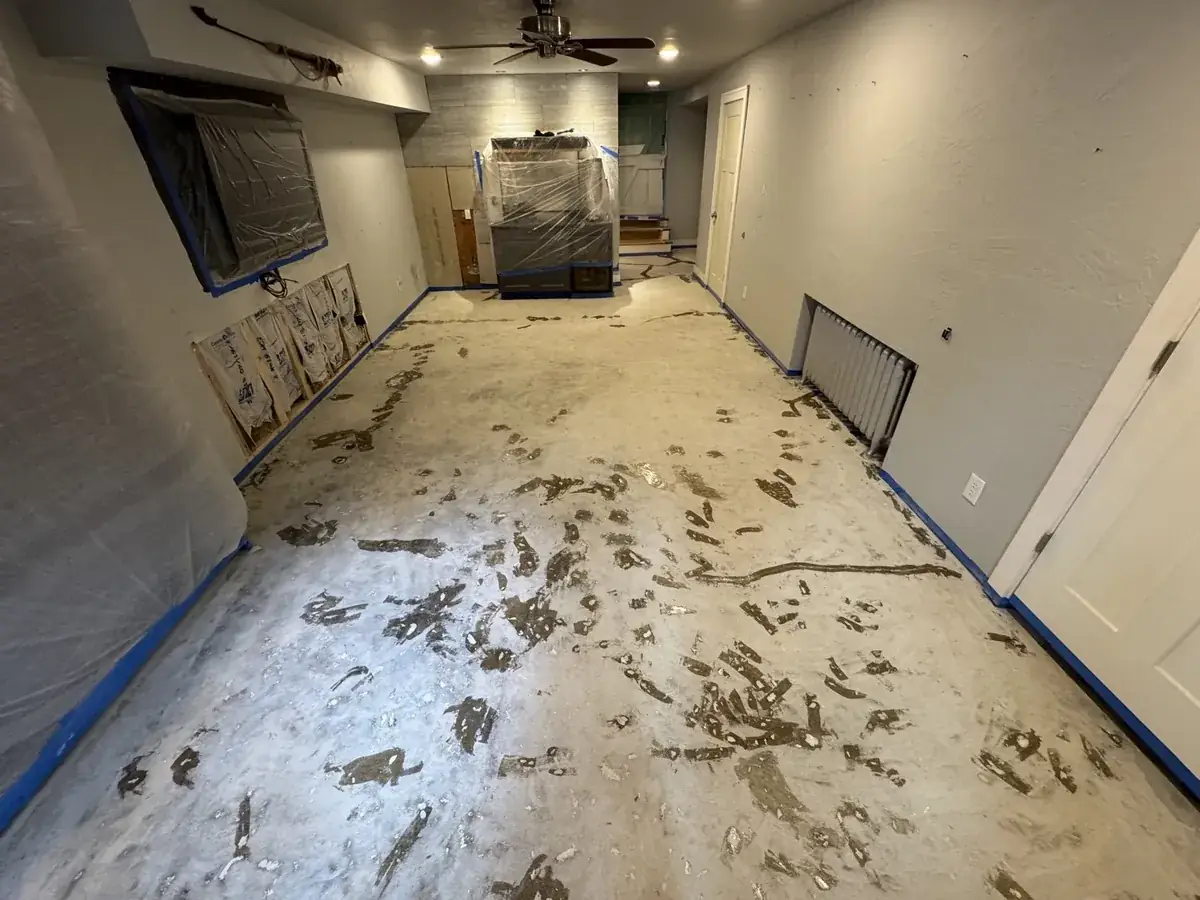
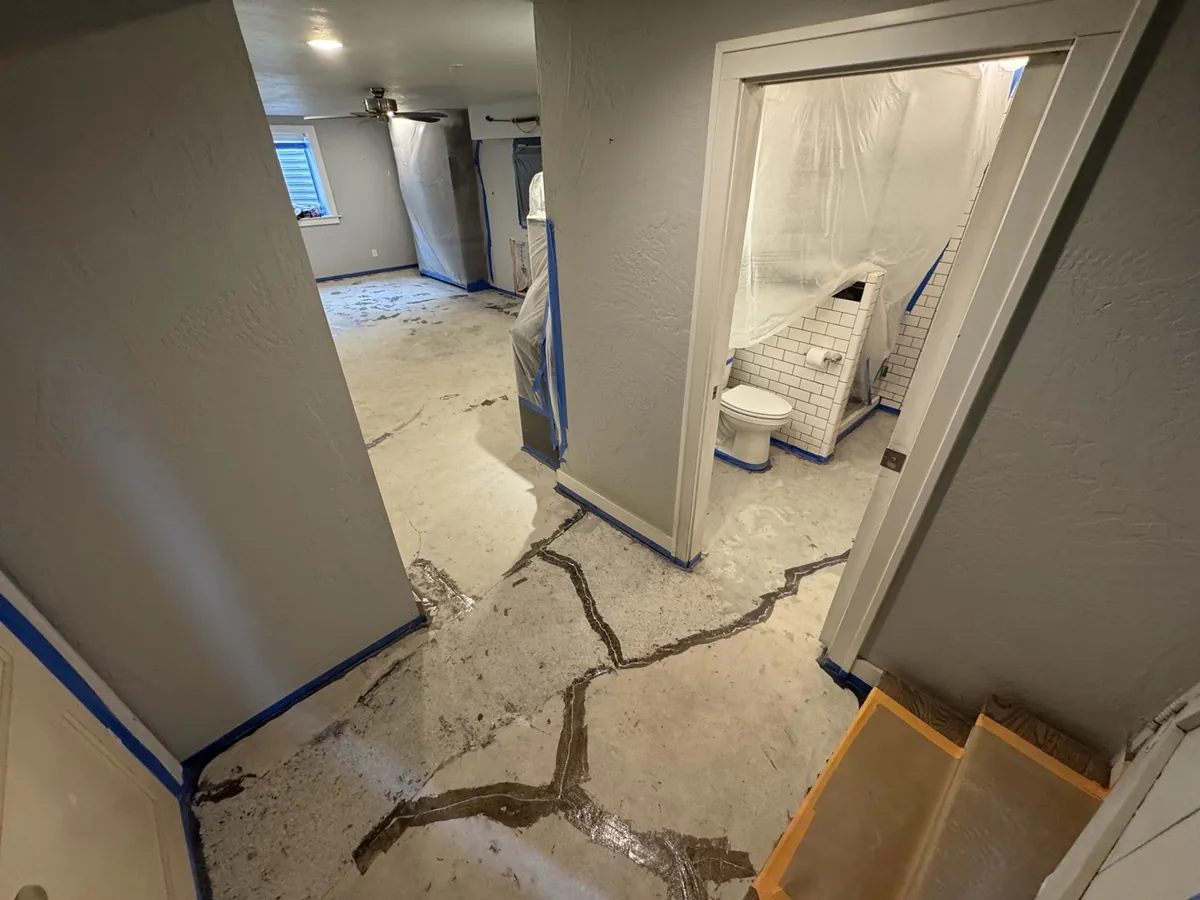
Diamond grinding opens the concrete pores for maximum adhesion. Existing coatings, paint, and sealers are fully removed, and cracks and damage are repaired.
- 02
System application
A polyurea base coat goes down, followed by the decorative broadcast (flake or silica). Multiple coats build a system thickness matched to your use case.
- 03
UV-stable topcoat
A UV-stable polyaspartic clearcoat seals the system. This is what keeps the color true and the surface abrasion-resistant for years of daily use.
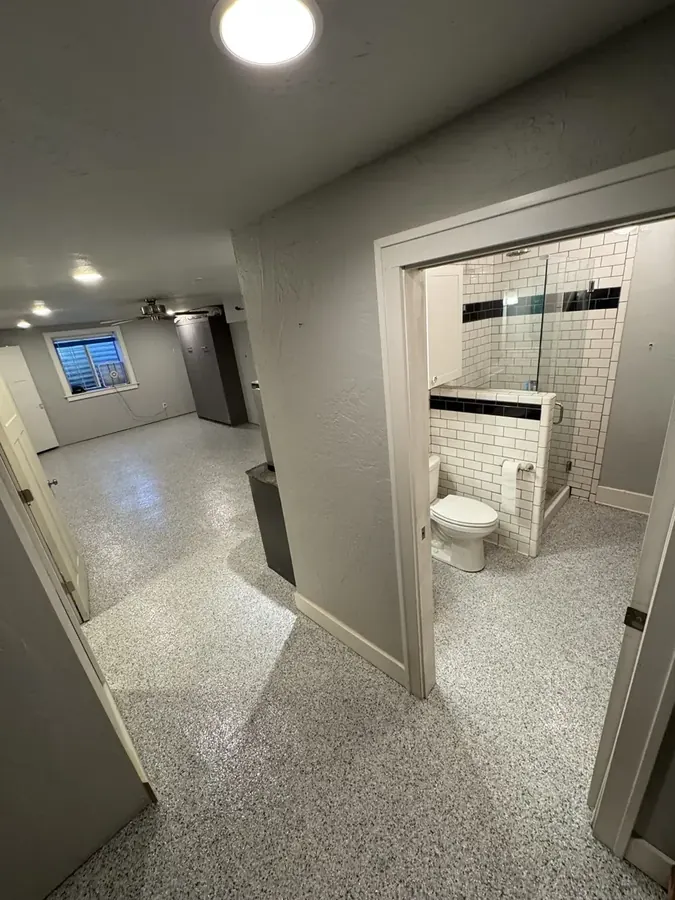
Polyaspartic floors before & after
The same diamond-grind foundation under every silica neutral and bold flake blend.
Polyaspartic questions
What is polyaspartic coating?
Polyaspartic is a type of polyurea floor coating. It cures faster than traditional epoxy, it is UV-stable so it does not yellow in sunlight, and it stays flexible through freeze-thaw cycles, which suits garage floors, basements, driveways and commercial spaces. We use it as the top coat over a polyurea base coat.
What is the difference between polyurea and polyaspartic?
Polyaspartic is a type of polyurea. Rhino Coatings uses both: a polyurea base coat goes down on the diamond-ground slab and holds the flake or silica broadcast, and a polyaspartic top coat seals it, because polyaspartic is UV-stable and does not yellow in sunlight. Every floor we coat gets both layers.
Do you install epoxy floor coatings?
No. We install a polyurea base coat with a polyaspartic top coat instead of epoxy. Compared with epoxy, it has a more abrasion-resistant, UV-stable top coat that won't yellow, and it is a one-day install you can walk on in about 8 hours and drive on in about 72. If you've been quoted an "epoxy floor," the full epoxy-vs-polyaspartic breakdown is right here on this page.
How long does polyaspartic coating last?
Rhino Coatings backs every floor it coats, residential or commercial, with a lifetime warranty against peeling, delamination and hot-tire pickup. We do not publish a number of years because how long any coating lasts depends mostly on prep, which is why every slab is diamond-ground and its cracks and joints filled with polyurea first.
What is a flake floor?
A flake floor is a coating with vinyl flake broadcast by hand into the polyurea base coat to full refusal, then sealed under a clear, UV-stable polyaspartic top coat. The flake hides dust and tire marks and gives the floor some grip. There are 13 flake blends, and the rep brings samples to lay on your own slab.
Can polyaspartic be applied over existing epoxy or paint?
No. Existing epoxy or paint is diamond-ground off to bare concrete before we coat, and removal is part of the standard prep.
What does your warranty cover?
Every install, residential or commercial, is backed by a lifetime warranty against peeling, delamination, and hot-tire pickup. The warranty stands for as long as you own the property. Real coverage from a local, veteran-owned company, not franchise fine print.
Related floor coating services
Polyaspartic floor coatings near you
Polyaspartic in Coeur d'Alene Polyaspartic in Dalton Gardens Polyaspartic in Post Falls Polyaspartic in Hayden Polyaspartic in Spokane Polyaspartic in Spokane Valley Polyaspartic in Liberty Lake Polyaspartic in Sandpoint Polyaspartic in Boise Polyaspartic in Meridian Polyaspartic in Eagle Polyaspartic in Nampa
Get a free floor coating quote
Tell us about your floor and we'll set up a free on-site measure. The rep checks the slab, shows you colors and gives you a fixed, written price. No high-pressure sales.
Or call 208-500-1043
The form takes about 45 seconds, and we'll text or email you within the hour. Phones answer Mon-Fri 8am-6pm, Sat 8am-4pm, Pacific time.
- Free measure
- Fixed price
- Lifetime warranty
- Veteran-owned and insured