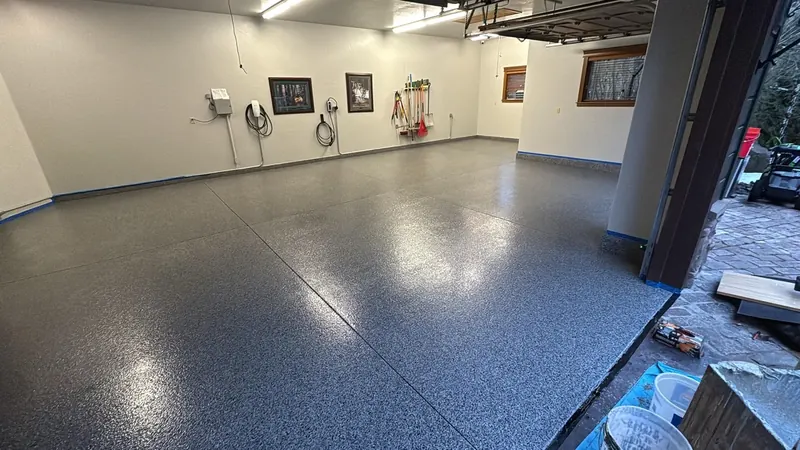
Concrete floor coatings for garages, patios & shops
Rhino Coatings installs concrete floor coatings in Coeur d'Alene, Spokane and Boise, on garages, patios, driveways, basements, shops, and commercial floors. Polyurea base, polyaspartic top coat, diamond-ground prep, done in a single day on most floors, with a lifetime warranty.
Concrete floor coatings at a glance
- Surfaces
- Garages, patios, basements, shops and commercial floors
- System
- Polyurea base coat, polyaspartic top coat
- Finish
- Flake or silica broadcast
- Install
- One day on most floors
- Warranty
- Lifetime, residential and commercial
- Price
- Fixed and written, after a free on-site measure
What a concrete floor coating fixes
Bare concrete is porous, dusty, and slowly falling apart. A professional coating seals it for good. Here's what it puts a stop to.
Concrete dust
Bare slabs shed fine gray dust onto tools, totes, shelving, and the cars parked on them. A sealed coating locks the concrete down for good, so no more wiping dust off everything.
Stains & spills
Oil, brake fluid, antifreeze, paint, and even a spilled drink soak straight into porous concrete and stain it permanently. A non-porous coating lets spills wipe up with a rag.
Cracking, pitting & spalling
Freeze-thaw and road salt break down an unsealed surface layer by layer. We repair and seal the slab so water can’t get in and keep working it apart.
Road salt & snowmelt
Idaho winters drag deicer and snowmelt onto the floor. Polyaspartic is non-porous and freeze-thaw flexible, so salt and meltwater sit on the surface instead of soaking in and pitting the slab.
Slick, tired-looking slabs
A hand-broadcast flake or silica surface adds real slip resistance and turns a dull gray slab into a finished, showroom-clean floor that lifts the whole space.
Our polyurea and polyaspartic coating system
Every Rhino concrete coating is the same stack, laid down in the same order. Only the slab underneath changes, and the prep changes with it.
- Diamond-ground prep for a permanent mechanical bond, with no bond failure like rolled-on paint
- Polyurea base coat: flexible, fast-setting, and deep-penetrating into the slab
- Flake or silica broadcast: slip resistance, depth, and 1,700+ color options
- UV-stable polyaspartic top coat: more abrasion-resistant than epoxy and won't yellow indoors or out
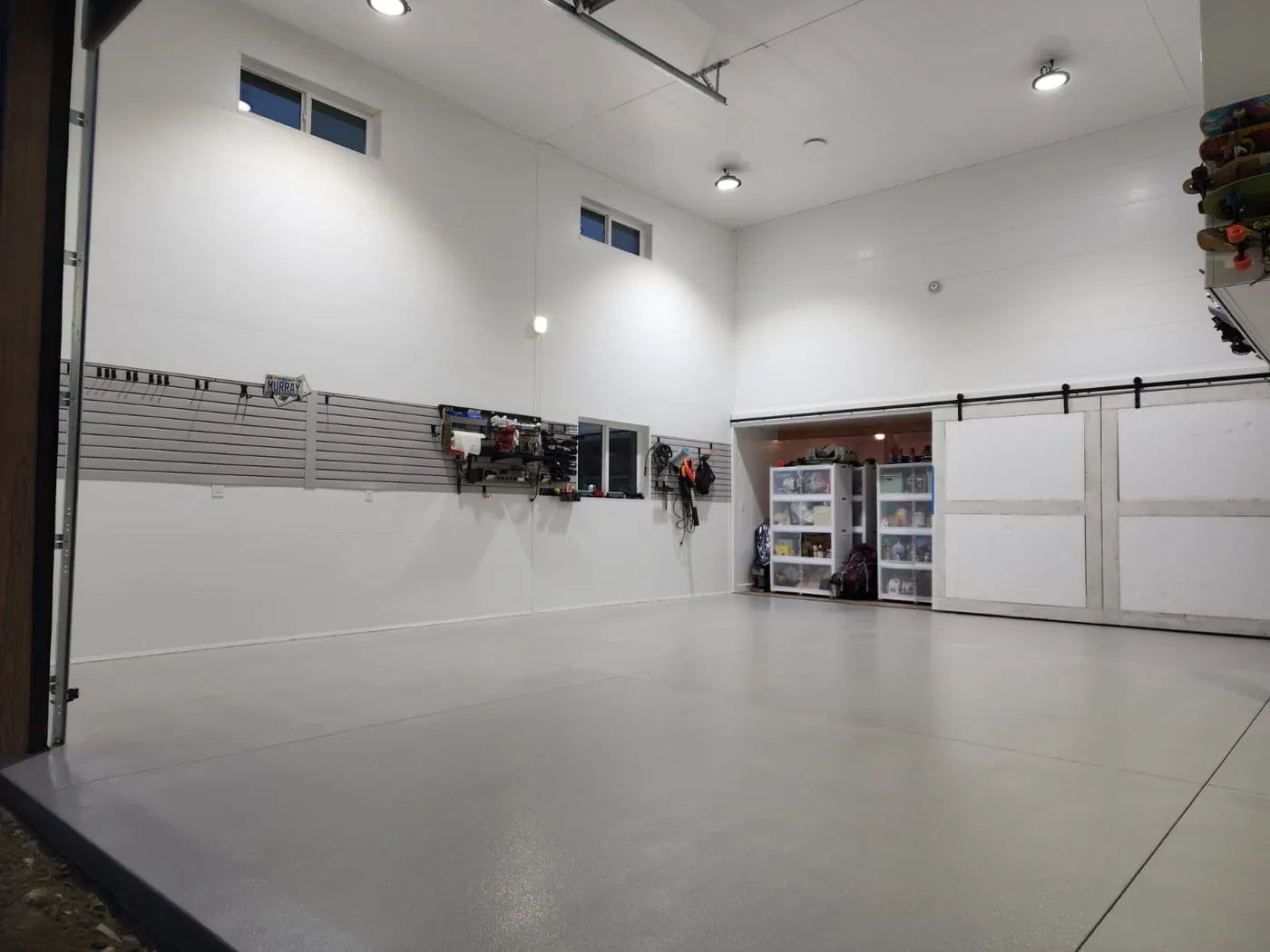
Concrete coatings for
every surface
Whatever the concrete is, inside or out, residential or commercial, the coating follows. Pick your surface and we'll take it from there.
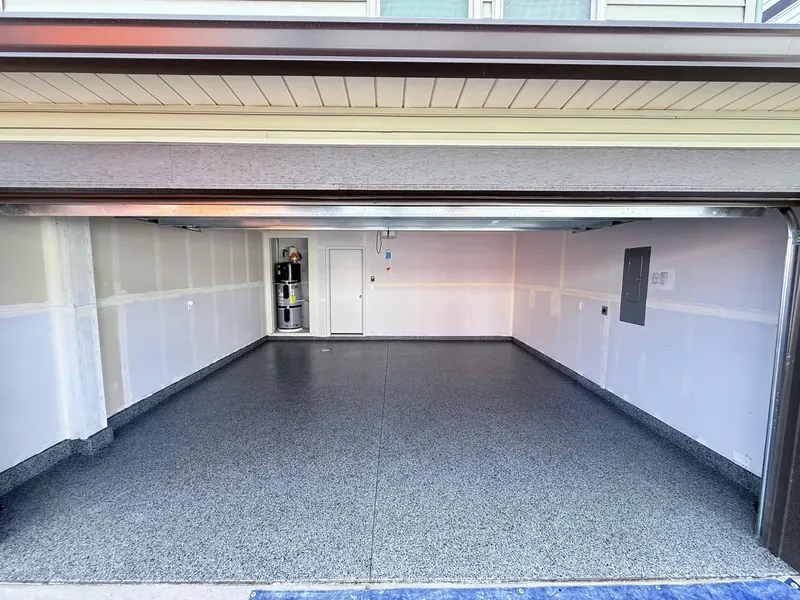
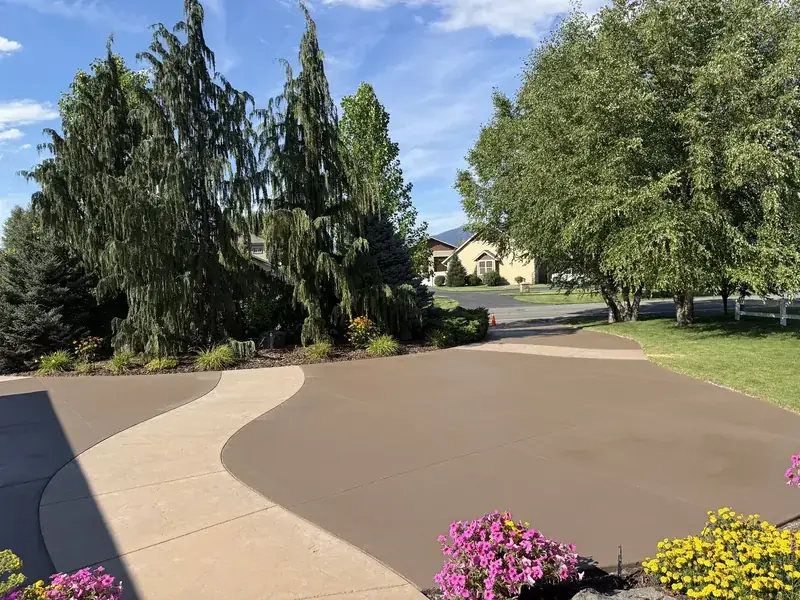
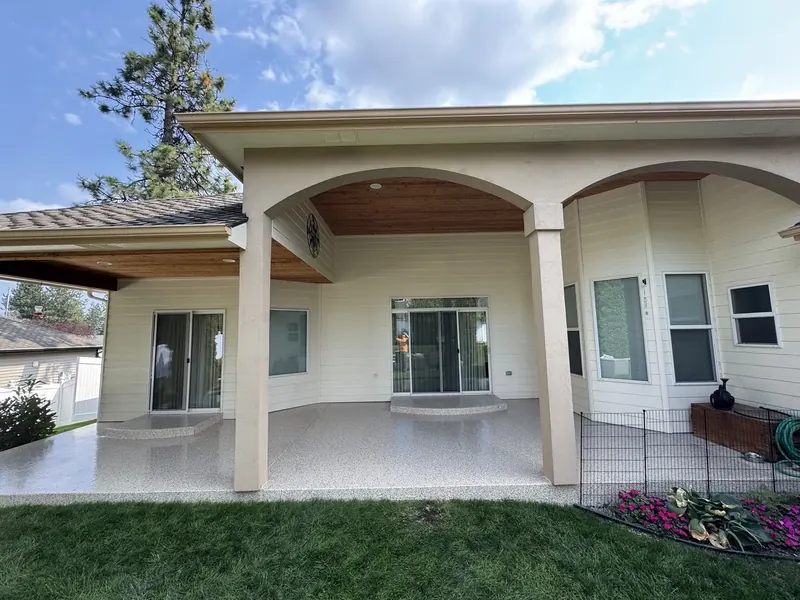
Driveway, patio and pool deck coatings
We coat concrete driveways, patios, pool decks, walkways and porches with the same system we put down in a garage: a diamond-ground slab, a polyurea base coat, a broadcast for grip and color, and a UV-stable polyaspartic top coat.
- Holds its color in the sun: the polyaspartic top coat is UV-stable, so it will not yellow outdoors the way epoxy does
- Back in use fast: walk on it in about 8 hours and drive on a coated driveway in about 72
Patios, porches, walkways and pool decks have their own page, with the finish we recommend for each surface and why silica grips better when wet: patio, porch and pool deck coatings. Cracked or spalled outdoor slabs get concrete repair before the base coat goes down, and the rep checks the concrete at the free on-site measure. Outdoor floors carry the same lifetime warranty as every other floor we coat.
Driveway & patio coatings near you
Driveway and patio in Coeur d'Alene Driveway and patio in Post Falls Driveway and patio in Hayden Driveway and patio in Spokane Driveway and patio in Spokane Valley Driveway and patio in Sandpoint Driveway and patio in Boise Driveway and patio in Meridian Driveway and patio in Nampa
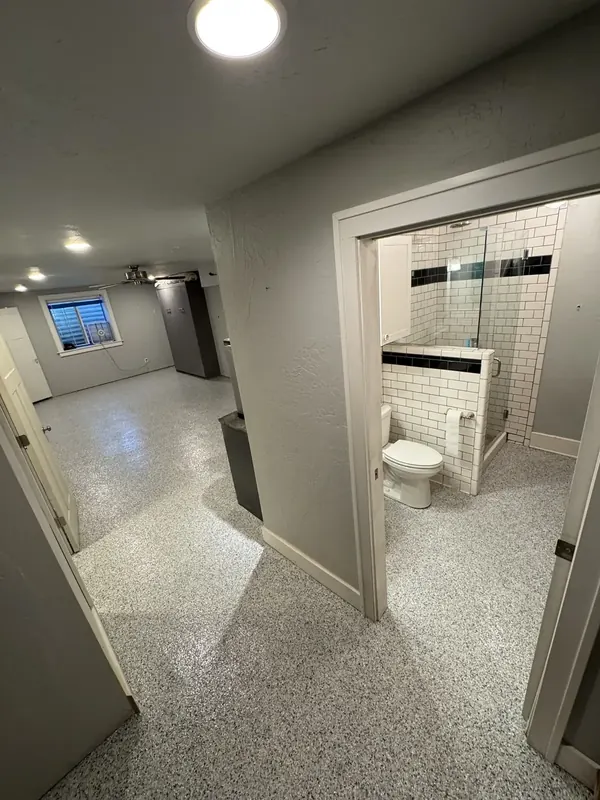
Basement floor coatings
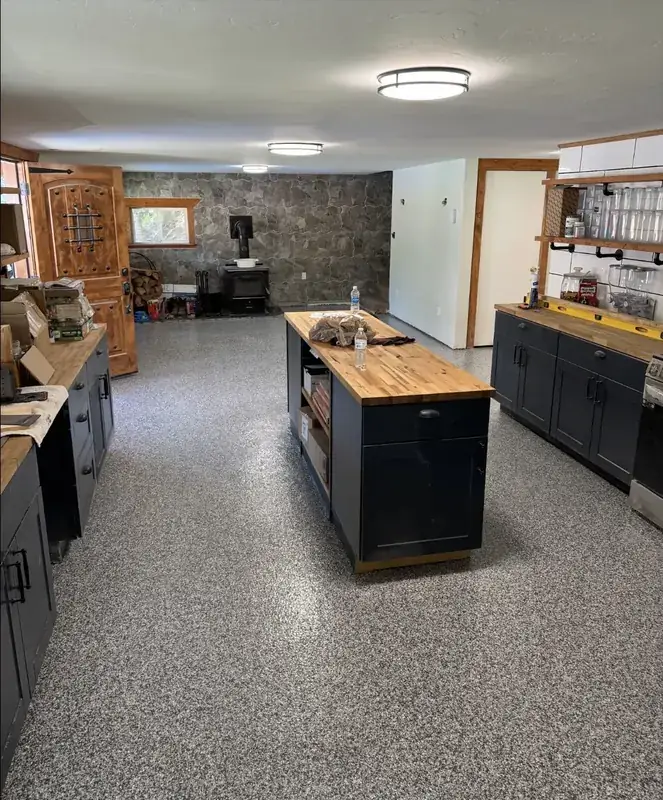
A basement floor coating seals the concrete so it stops shedding dust, and turns a bare slab into a finished floor that wipes clean. It is the same polyurea base coat and polyaspartic top coat we put down in garages, over a diamond-ground slab.
- No more concrete dust: a sealed floor stops the fine gray dust a bare slab sheds onto everything stored on it
- A brighter room: light flake blends and pale silica colors bounce back the light you already have in a dark basement
- A finished look: smooth silica systems in 1,700+ paint-matched Sherwin-Williams colors suit finished basements, mudrooms and laundry rooms
- One day: most basements are coated in a single day, and you can walk on the floor in about 8 hours
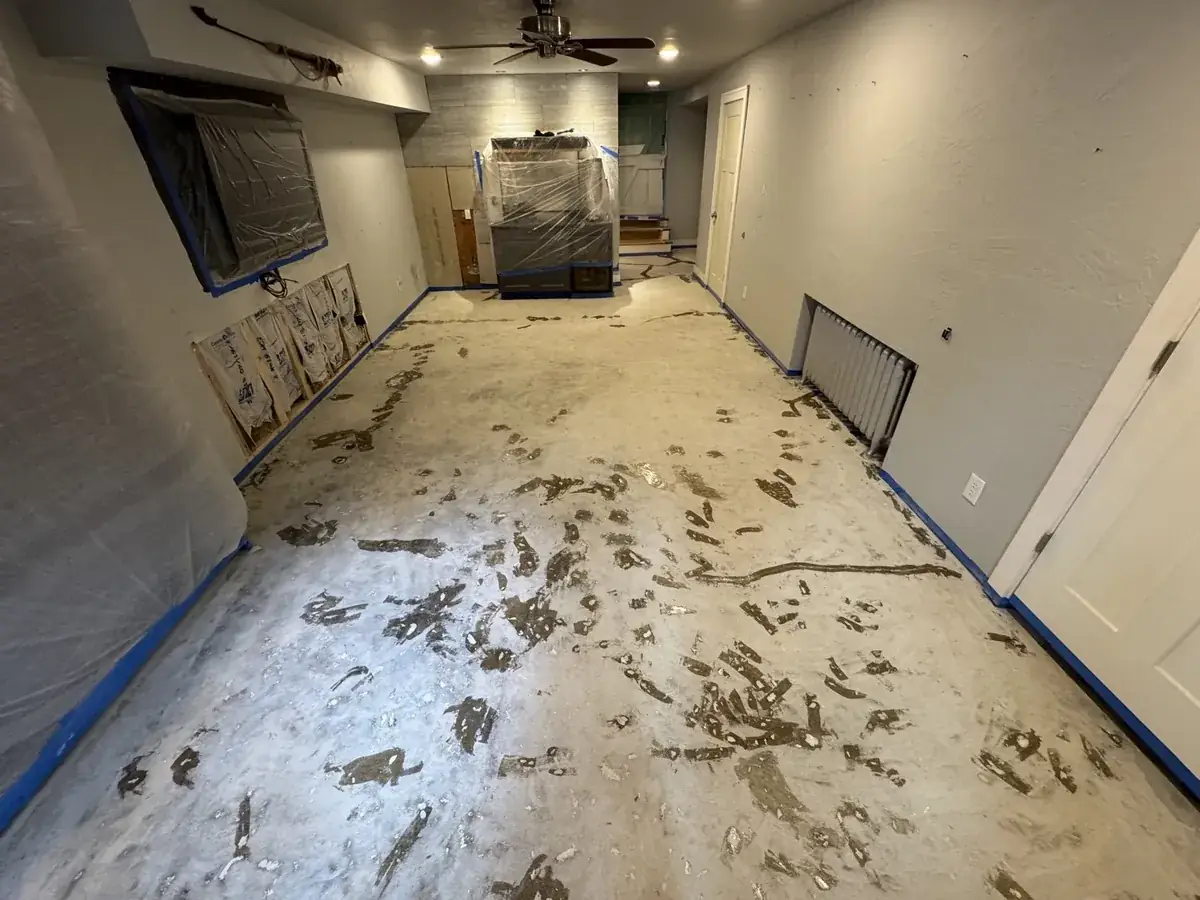
We check the slab at the free estimate before we coat. A coating will not fix active seepage: if water is coming through the floor or walls, that needs its own fix first, and we will tell you rather than coat over it. Old flooring adhesive is ground off and cracks are filled as part of the prep, like the basement on our concrete repair page.
Basement floor coatings near you
Basement floor in Coeur d'Alene Basement floor in Post Falls Basement floor in Hayden Basement floor in Spokane Basement floor in Spokane Valley Basement floor in Sandpoint Basement floor in Boise Basement floor in Meridian Basement floor in Nampa
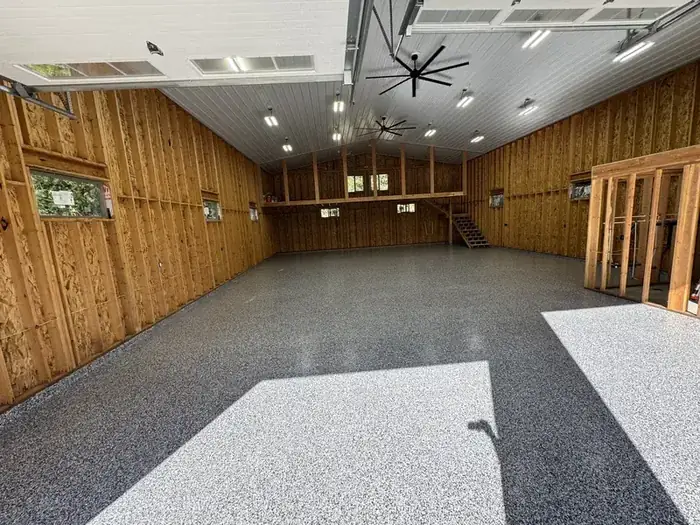
Shop and pole barn floor coatings
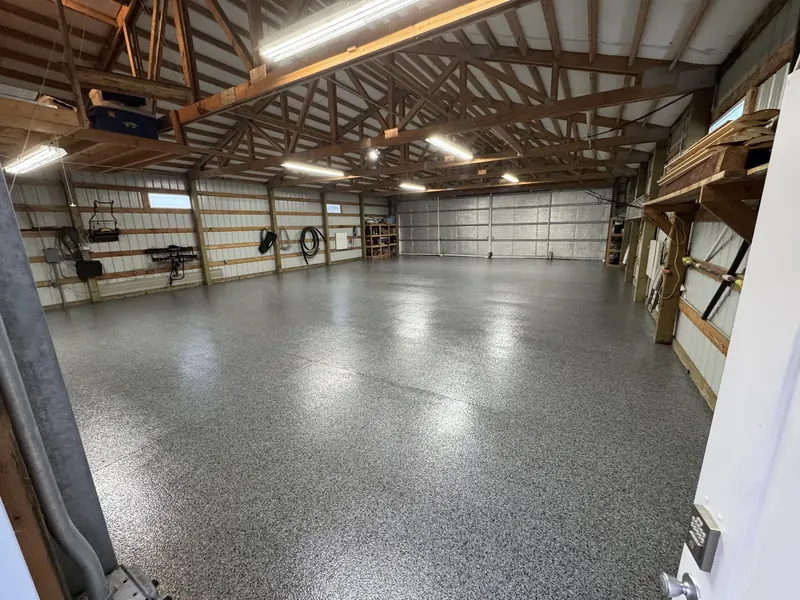
Mechanic shops, woodshops, pole barns, RV bays and hangars get the same diamond-ground, polyurea and polyaspartic system as a garage, built for the hot tires, fluids and impact a working floor takes every day.
- Hot tires: the polyaspartic top coat resists hot-tire pickup, and the lifetime warranty covers it
- Fluids: oil, diesel, hydraulic fluid and antifreeze sit on the non-porous surface until a rag gets to them, instead of soaking in and staining the slab
Everything a working floor puts a coating through, and the floors we coat, is on our shop and pole barn floor coatings page. Most garages are a one-day install; a large shop floor, RV bay or hangar can take 1 to 3 days, and we confirm the schedule at the free on-site measure. Cracked and worn shop slabs are ground and repaired before the base coat, the same as every floor we coat.
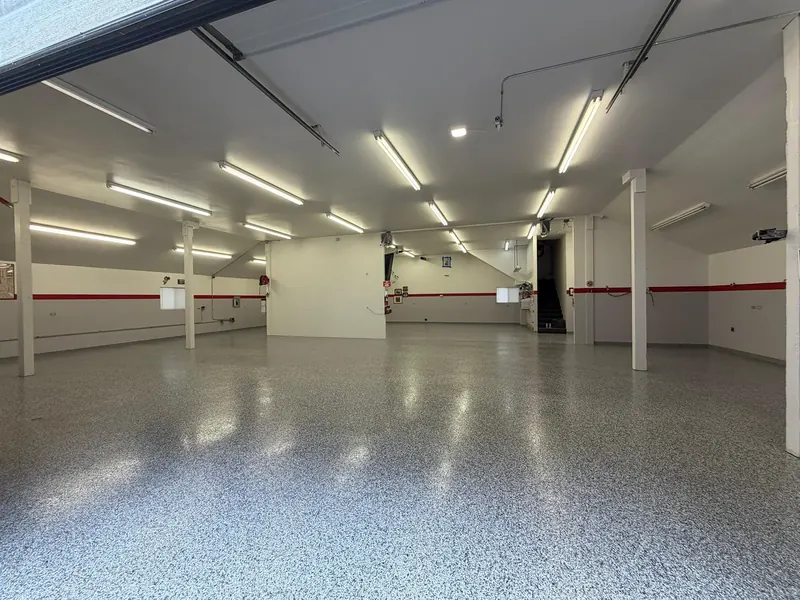
Commercial floor coatings
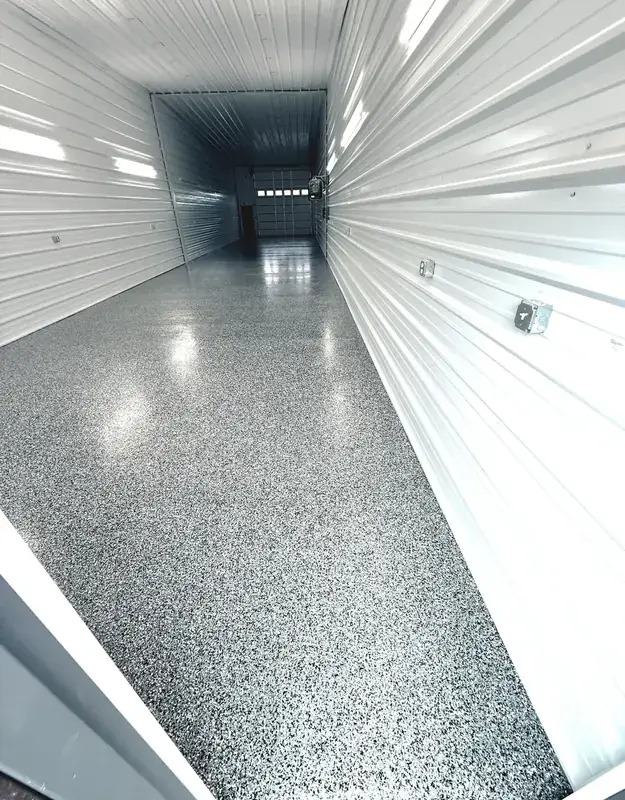
We coat showrooms, retail floors, restaurants, hospitals, clinics, medical offices and manufacturing floors with the same polyurea base coat and UV-stable polyaspartic top coat we install in homes, and we phase the work so the building keeps running.
- Phased installs: we coat one area at a time, or over a weekend, so the rest of the space stays open
- Fast return to service: walk on a coated section in about 8 hours and drive on it in about 72
- Built for traffic: hot tires, fluids and impact, on a sealed, non-porous surface that wipes clean
- Hospitals and healthcare buildings: we coat one wing, corridor or room at a time so patient areas stay open, and the sealed floor has no grout lines for dirt to settle into
- The same lifetime warranty: commercial floors carry the same lifetime warranty as residential ones, in writing with your quote
- Our own crews: no subcontractors, from the grinding and repairs to the final top coat
Large and high-traffic floors get the same diamond-grind prep and polyurea crack and joint fill as a garage, so the coating bonds to sound concrete. The rep walks the space at the free on-site measure, checks the concrete and confirms the phasing and schedule with you, then you get a fixed, written price.
The 1-day concrete coating install
Most concrete floors start and finish in a single day. Here's how the day goes.
- 01
Diamond-grind & repair
We diamond-grind the slab to open the concrete pores, then fill cracks and control joints with polyurea and repair spalls so the system bonds to sound concrete for the long haul.
- 02
Base coat & broadcast
A polyurea base coat goes down, then your flake or silica is hand-broadcast to full refusal for a dense, slip-resistant surface with real depth and color.
- 03
Polyaspartic top coat
A UV-stable polyaspartic top coat seals it all in. Walk on it in about 8 hours; drive or park on it in about 72 once it has fully cured.
How concrete floor coatings are priced
Every floor gets a fixed, written price after a free on-site measure, never a number over the phone. Three things set it:
- Slab size. The square footage of the concrete we coat.
- Repair needed. How many cracks, joints, spalls and pitted areas need repair before the base coat goes down.
- Finish. A flake or a silica broadcast.
The garage floor page explains what sets the price in full, with what every written quote includes and how the free measure works. The same rules apply to every concrete floor we coat.
Concrete coating questions
What is a concrete coating?
A concrete coating is a professional resin floor system bonded to a diamond-ground slab, not paint and not a big-box DIY kit. Ours is a polyurea base coat, a hand-broadcast flake or silica layer for texture and color, and a UV-stable polyaspartic top coat. Together they seal the concrete for good and leave a hard, non-porous, easy-to-clean surface.
How much do concrete coatings cost?
Concrete coating cost depends on the square footage, the condition of the slab, and whether you choose a flake or silica system. We give you a fixed, written price after a free on-site measurement. No estimate creep and no surprise charges on install day.
How long do concrete floor coatings last?
Rhino Coatings backs every floor it coats, residential or commercial, with a lifetime warranty against peeling, delamination and hot-tire pickup. We do not publish a number of years because how long any coating lasts depends mostly on prep, which is why every slab is diamond-ground and its cracks and joints filled with polyurea first.
Is epoxy or polyaspartic the better concrete coating?
Polyaspartic, for nearly every floor; we install polyaspartic, not epoxy. See polyaspartic floor coatings vs epoxy.
Can you coat old, cracked, or pitted concrete?
Usually, yes. We diamond-grind the slab to open the pores and repair cracks, control joints, spalls, and pitting before any coating goes down, so the system bonds to sound concrete. A badly worn slab gets extra grinding and repair first. We confirm exactly what your concrete needs at the free estimate.
Do you coat interior and exterior concrete?
Both. Outside, the UV-stable polyaspartic top coat holds its color on patios, driveways, and pool decks that would yellow under epoxy, and it stays flexible through Idaho freeze-thaw cycles. Inside, the same system handles garages, basements, shops, and commercial floors.
How long before I can use my coated concrete floor?
Most floors are a single-day install. You can typically walk on the surface in about 8 hours and drive or park on it in about 72 hours once the polyaspartic top coat has fully cured, far faster than epoxy, which can keep a slab out of service for days.
Is a coating better than a sealer on a concrete driveway?
They do different jobs: a sealer treats bare concrete, while a coating is a finished surface with grip, color and a lifetime warranty against peeling and delamination. If you want a finished driveway rather than a treated one, the coating is the better fit. See our patio, porch and pool deck coatings.
Will a coating stop water coming through my basement floor?
No: water coming up through the slab or in through the walls needs its own fix before any coating goes down, and the rep will flag it at the free estimate. A coating stops the concrete dust, not the water. See our basement floor coatings.
Can a coated shop floor handle hot tires and fluids?
Yes: hot-tire pickup is one of the failures the lifetime warranty names, and oil, diesel and antifreeze wipe up from the sealed, non-porous surface. Dropped tools and jack stands mark it less than epoxy, because the top coat is more abrasion-resistant. See our shop and pole barn floor coatings.
Can you coat a commercial floor without closing the business?
In most cases, yes: we phase the work by area, or schedule it over a weekend, and part of the floor stays in use. We set the phasing with you at the free on-site measure, and a coated section takes foot traffic in about 8 hours. See our commercial floor coatings.
Related concrete floor coating services
Concrete floor coatings by town
Coeur d'Alene Dalton Gardens Post Falls Hayden Spokane Spokane Valley Liberty Lake Sandpoint Boise Meridian Eagle Nampa
Get a free floor coating quote
Tell us about your floor and we'll set up a free on-site measure. The rep checks the slab, shows you colors and gives you a fixed, written price. No high-pressure sales.
Or call 208-500-1043
The form takes about 45 seconds, and we'll text or email you within the hour. Phones answer Mon-Fri 8am-6pm, Sat 8am-4pm, Pacific time.
- Free measure
- Fixed price
- Lifetime warranty
- Veteran-owned and insured