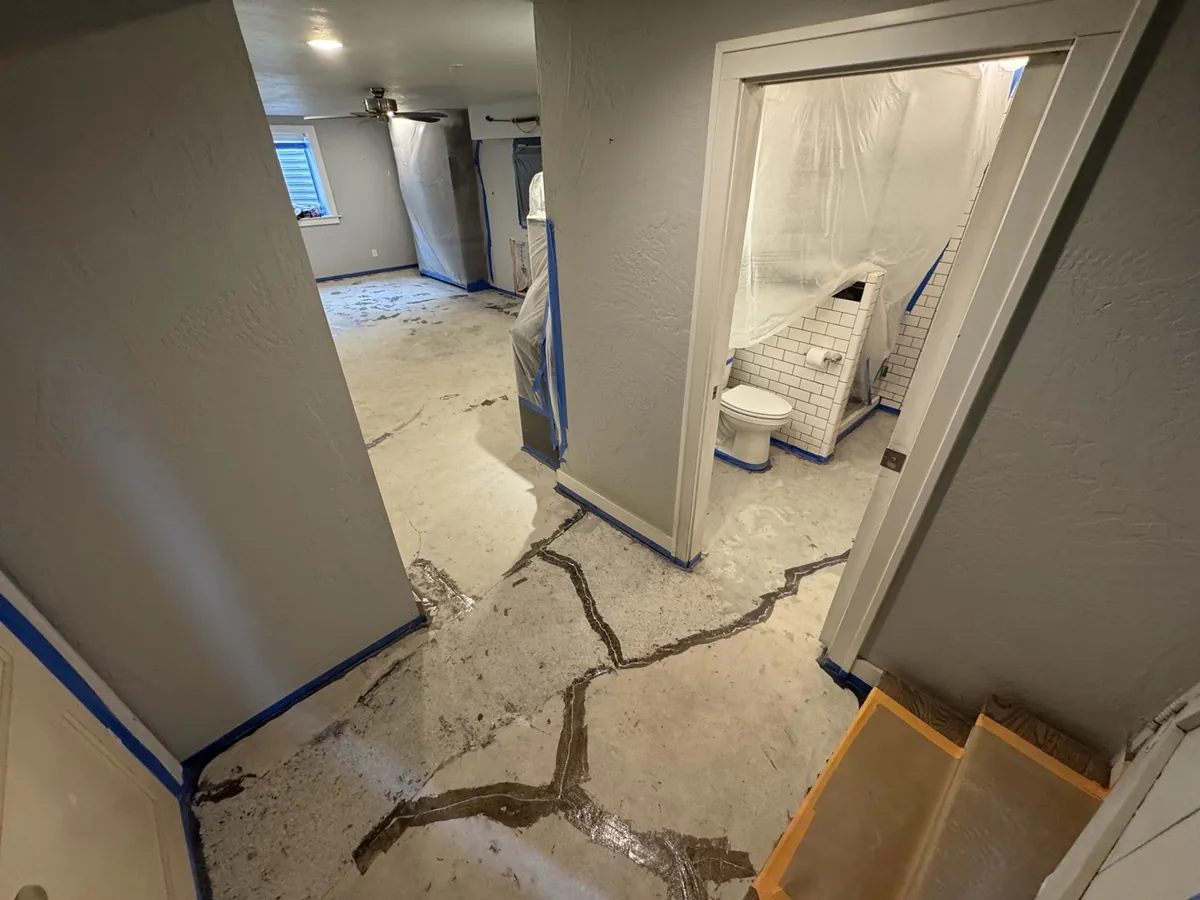
Concrete repair for cracks, spalls and pitted slabs
Rhino Coatings does concrete repair for cracked, spalled and pitted slabs in Coeur d'Alene, Spokane and Boise, on its own or as prep for a floor coating. We find the cause, repair each type of damage with the method that fits it, then diamond-grind the slab so it is ready for a polyurea base coat and polyaspartic top coat, or ready to use.
We do not pour, lift or level sunken concrete. If your slab needs that, have it done first, and we will grind, repair and coat it after.
Concrete repair at a glance
- Repairs
- Cracks, control joints, spalls and pitting
- Crack fill
- Polyurea, flexible through freeze-thaw
- Prep
- Diamond grinding, not acid etching
- Options
- Repair only, or repair plus a coating
- Price
- Fixed and written, after a free on-site measure
Concrete damage we repair
Each type of damage below gets the repair that fits its cause.
We restore worn concrete by grinding and repairing the slab itself.
Shrinkage cracks
Hairline and narrow cracks formed during initial concrete curing. Filled with semi-rigid polyurea for a flexible, permanent repair that moves with the slab.
Wide-gap & structural cracks
Cracks wider than 1/8" or caused by settlement and movement. Ground out, filled with structural polyurea or cementitious mortar, and monitored for activity before coating.
Spalling & surface pop-outs
Caused by freeze-thaw cycles, deicing salts, or weak surface concrete. Profiled with a grinder or scarifier and patched with cementitious repair mortar feathered to the surrounding surface.
Edge & threshold damage
Garage door thresholds and slab perimeters take significant abuse. We rebuild damaged edges to their original profile before the coating system is applied.
Pitting & deterioration
Aggregate exposure, pitting, and surface laitance are removed via diamond grinding to reveal fresh, sound concrete ready for coating adhesion.
Existing coating removal
Old paint, epoxy, or sealer must be fully removed before a new polyaspartic system is applied. We strip existing coatings completely with mechanical grinding.
Why concrete surface prep matters
We diamond-grind every floor and repair every crack and damaged area before applying any coating. It isn't optional for us; it's the standard that defines a floor that lasts.
Prep over product
A coating is only as good as the concrete under it. A coating applied over a weak, contaminated, or damaged surface delaminates no matter how good the product is.
We grind every floor
Diamond grinding on every job removes laitance, opens the pores, and creates the correct surface profile (CSP) for maximum coating adhesion. It is the difference between a coating that peels and one that bonds into the slab.
Right method per damage
Every damage type has a right repair method. Hairline cracks, structural cracks, spalls, edges, and pitting each get the matched fix: polyurea injection, structural mortar, or a rebuilt profile.
Standalone or pre-coat
You don't have to coat to get repairs done. We handle concrete restoration as a standalone service for driveways, garage floors, basement slabs, and commercial floors.
Our concrete repair process
Identify the cause, repair to the root, profile for adhesion, in that order.
- 01
Damage assessment
We inspect the full slab (cracks mapped, spalls measured, edges evaluated) and identify the cause (settlement, freeze-thaw, impact, shrinkage) so the repair addresses the root, not just the symptom.
- 02
Repair & restoration
Cracks are ground out, injected, and filled. Spalls and pop-outs are profiled and patched with repair mortar. Damaged edges and thresholds are rebuilt to their original profile.
- 03
Surface profile
The full slab is diamond-ground to the correct surface profile for the intended coating system, removing laitance, opening the pores, and ensuring maximum adhesion.
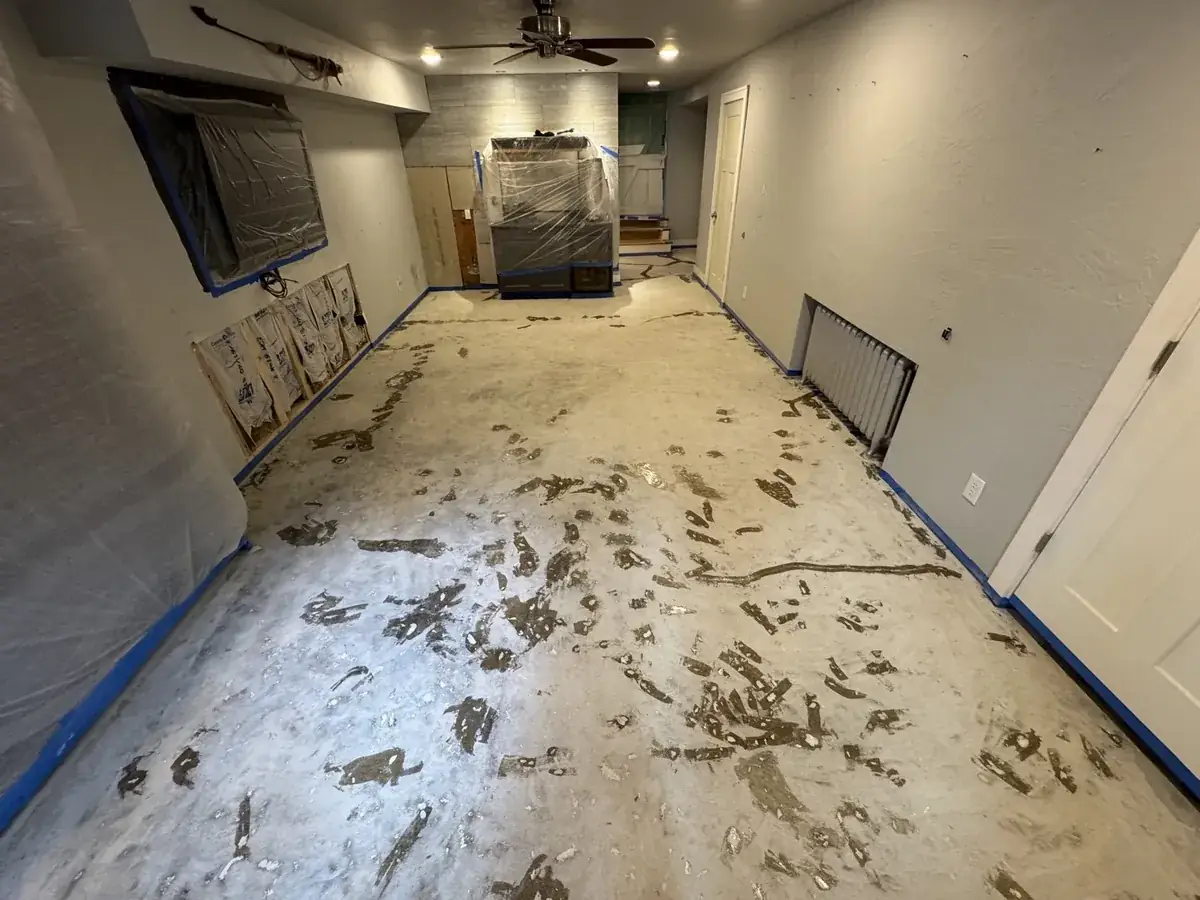
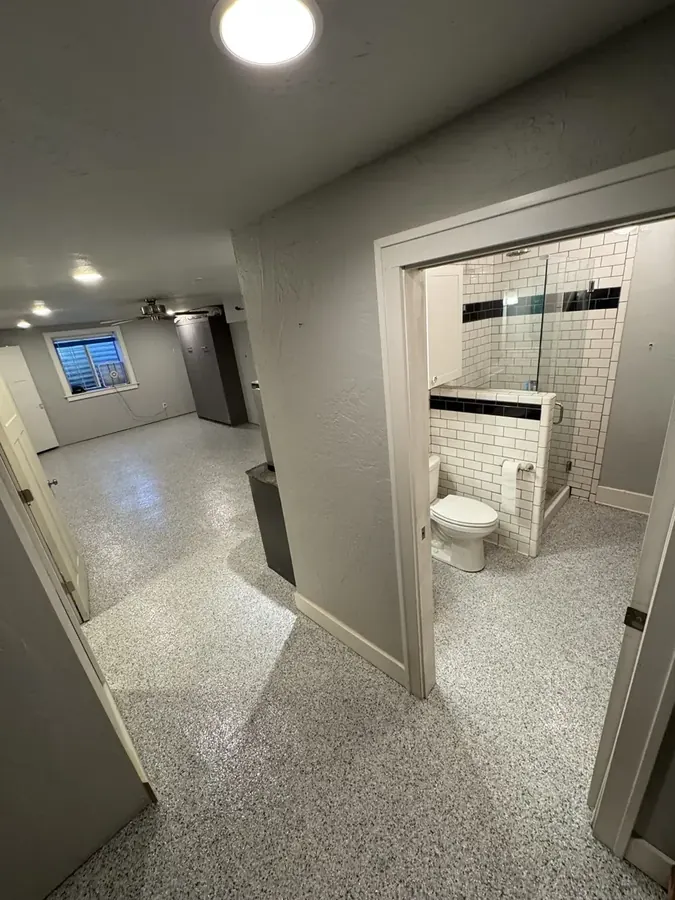
Concrete repair before, during & after
Every repair starts with an honest assessment and ends with a surface ready to coat or ready to use.
Concrete repair questions
Do you offer concrete repair without a full floor coating?
Yes. Concrete repair is available as a standalone service for driveways, garage floors, basement slabs, and commercial floors. We assess the damage and provide a repair-only quote at no charge.
Do you lift or level sunken concrete?
No. We do not pour new slabs, replace sections, or lift or level sunken concrete. If your slab needs that, have it done first, and we will grind, repair and coat it after.
Can you repair concrete cracks before coating?
Yes. In fact, it is required. We repair all cracks before applying any coating. Methods vary by crack type: shrinkage cracks are filled with semi-rigid polyurea, while moving or structural cracks may require structural mortar and monitoring before the coating goes down.
Can you put a floor coating on a cracked garage floor?
Yes, once the cracks are repaired. Cracks and control joints are filled with polyurea that stays flexible through freeze-thaw, spalls are patched, and the whole slab is diamond-ground before the polyurea base coat goes down. Coating straight over open cracks is how floors fail, so we never skip the repair.
Can badly damaged concrete be saved, or does it need to be replaced?
Most damaged concrete can be restored to a coatable condition without replacement. The threshold is structural integrity: if the slab has heaved significantly, is actively sinking, or has deep structural failure, replacement may be warranted. We tell you honestly at the assessment.
How do you fix a garage floor that's flaking or spalling?
Spalling (surface delamination) is addressed by profiling the damaged area with a grinder or scarifier, then filling with a cementitious repair mortar. The repair is feathered to match the surrounding surface level and allowed to cure before the floor is coated.
Concrete floor coatings and related services
Concrete repair near you
Concrete repair in Coeur d'Alene Concrete repair in Post Falls Concrete repair in Hayden Concrete repair in Spokane Concrete repair in Spokane Valley Concrete repair in Sandpoint Concrete repair in Boise Concrete repair in Meridian Concrete repair in Nampa
Get a free concrete repair assessment
Tell us about the damage and we'll set up a free on-site assessment. The rep checks the cracks, spalls and pitting and gives you a fixed, written price for the repair, on its own or with a coating. No high-pressure sales.
Or call 208-500-1043
The form takes about 45 seconds, and we'll text or email you within the hour. Phones answer Mon-Fri 8am-6pm, Sat 8am-4pm, Pacific time.
- Free on-site assessment
- Fixed price
- Repair only or repair plus a coating
- Veteran-owned and insured