What a floor coating warranty should cover
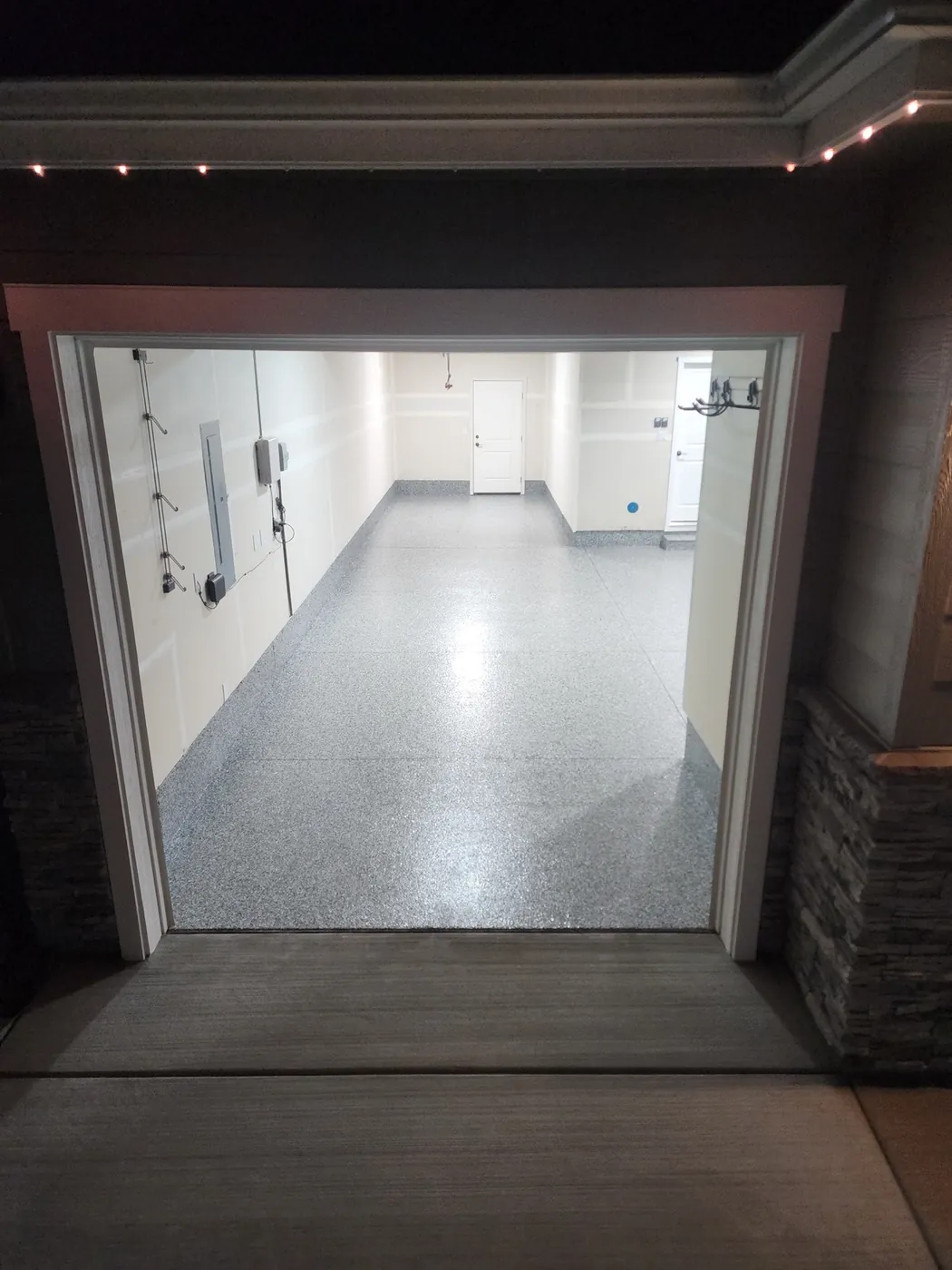
Most garage floor quotes mention a warranty, and on paper many of them sound alike. The differences are in the details: which failures are named, who stands behind the promise, and what was done to the concrete before the coating went down. This guide is about reading any floor coating warranty, so you can compare quotes on what they actually promise.
Rhino Coatings installs a polyurea base coat with a polyaspartic top coat over diamond-ground concrete. We do not install epoxy. Near the end, we say plainly what ours is. Everything before that applies to whoever you hire.
Why the paper matters more than the number
A warranty is a promise that a company will fix certain problems for a certain length of time. The length gets the attention, because it is the easiest part to compare. The more useful questions are which problems are covered, who does the fixing, and what you have to do to get it done.
A long warranty that names nothing specific can be worth less than a shorter one that names the failures you are actually worried about. For a garage floor, those failures are well known.
The ways floor coatings fail
Garage floor coatings tend to fail in a handful of familiar ways. A good warranty names the failures it covers in plain words, so nobody has to argue later about what a word like "defects" was supposed to include.
- Peeling. The coating lifts off the concrete, often starting at an edge, a crack or the strip inside the door where water sits.
- Delamination. The coating loses its bond, either to the concrete or between its own layers, and separates from the surface beneath it.
- Hot-tire pickup. A warm tire softens a weak coating, bonds to it, and pulls it up in the shape of the tread when the car backs out. It is the failure that gave garage floor coatings a bad name.
- Yellowing. Some coatings turn amber in sunlight, so the floor by the door ends up a different color from the back of the garage.
- Blistering. Moisture vapor rising through the slab can collect under a coating and push it up in blisters.
Ask which of these a warranty names, and in what words. If a failure you care about is not on the list, ask why, and get the answer in writing.
Material, labor, or both
Coating warranties usually come from one of two places. Manufacturers warrant their products, and installers warrant their work. A manufacturer's warranty on its own may cover only the material. On a failed floor, most of the work of making it right is grinding off the failed coating and putting a new one down, and that work is labor.
An installer's warranty covers the work, but only for as long as the installer is around to honor it. So ask two things of any warranty: does it cover the labor to fix the floor or only replacement material, and who actually does the fixing. The Federal Trade Commission's consumer advice on warranties suggests the same kind of questions, including who you contact for help and whether you have to pay for labor on a repair (FTC: Warranties).
Who backs it
A warranty is only as good as the company behind it. Before you sign, find out who is making the promise: the company that sold you the floor, the crew that installs it, the manufacturer of the material, or some combination. Then check that whoever it is can keep it.
- Look the company up. The FTC suggests looking into a company's reputation before you rely on its warranty, for example by searching its name with words like "complaint" and "review."
- Check the registration. In Washington, the Department of Labor and Industries has a Verify tool that shows whether a contractor has an active registration, a valid bond and insurance, and whether there are lawsuits against the bond (Washington L&I: Verify a contractor). Rhino Coatings is a registered Washington contractor, RHINOCL741CF, bonded and insured, for our Spokane-area work.
- Ask who you would call. If something goes wrong in a few years, you want to know exactly who picks up the phone, and you want them to be the people who did the work.
In-house crew or subcontractor
Some floor coating companies sell the job and send a subcontracted crew to do it. That can work, but it splits the responsibility. The company that wrote the warranty did not grind the slab or lay the coating, and if the floor fails, the first question becomes whose fault it was.
With an in-house crew, the people who prepared the concrete are the people who stand behind it. Ask any installer directly whether the crew on your floor works for them. Ours does. Every grind, repair and coat is done by somebody on our own crew, with no subcontractors.
In writing, before you sign
A promise you cannot read is a promise that is hard to use. Get the warranty in writing, and read it before you sign the contract, while you can still ask questions or walk away. If a salesperson promises something out loud, like free repairs, the FTC's advice is to get that promise in writing too.
The FTC also suggests saving a copy of the warranty along with your receipt, and the signed price belongs in the same folder. If you sell the house or need to make a claim years from now, that paperwork is what you will want to have.
What prep has to do with it
The failures a warranty is meant to cover usually start below the coating. A coating is only as good as the concrete under it, and a coating applied over a weak, contaminated or damaged surface delaminates no matter how good the product is. When we are called out to a floor that is peeling or bubbling, the problem almost always traces back to prep.
That is why the prep belongs in the same conversation as the warranty. A long warranty means the most when the installer has also done the prep that makes it unlikely you will ever need it. Ask how the slab will be prepared.
- Grinding or acid etching? We diamond-grind every slab, because grinding opens the concrete so the base coat bonds into it instead of sitting on top.
- What happens to cracks and joints? They should be repaired before any coating goes down. Ours are filled with polyurea, which stays flexible through freeze-thaw.
- Will anyone check the slab for moisture? Moisture coming up through concrete is a common cause of blistering, and the industry has several ways to test for it, from a plastic sheet taped to the floor to calcium chloride kits and humidity probes set into the slab. Ask what the installer looks for, and when.
For our part, we check the slab at the free estimate before we coat. If water is coming through the floor, that needs its own fix first, and we will tell you rather than coat over it.
What many warranties leave out
Every warranty has limits, and that is reasonable. No installer can promise a floor against everything that can happen in a garage. What matters is whether the limits are clear, and whether they are so broad that they swallow the coverage. Many floor coating warranties exclude some of these:
- Damage from impacts, gouges or dragging heavy equipment.
- Chemical spills that were left sitting.
- Moisture or water pressure coming up through the slab.
- New cracks from settling or structural movement of the slab.
- Normal wear, such as some loss of gloss in the traffic lanes.
- Damage from cleaning with harsh products or abrasive tools.
That list describes the industry in general, not any one company. Exclusions like these are normal. The questions are whether they are written down, whether you understand them, and whether anything you are worried about falls outside the coverage.
Words to pin down
A few words in a warranty mean different things from one company to the next.
- The length. On a residential floor, a lifetime warranty can mean the life of the coating, the life of the building or the time the original buyer owns the home. Whatever the length, ask what it is measured against and get the definition in writing.
- Transfer. Some warranties pass to the next owner when you sell the house, some do not, and some need paperwork to transfer. If resale matters to you, ask.
- Making a claim. Find out what you would actually do: who you contact, whether you need the original paperwork, and whether there are conditions, such as required maintenance, that you have to meet first.
Questions to ask any installer
- Which failures does the warranty name, in writing?
- Does it cover the labor to fix the floor, or only the material?
- Who backs it: your company, the manufacturer, or both?
- Will your own crew do the work, or a subcontractor?
- What is the length measured against, and is it the same for a commercial floor?
- What is excluded?
- Does it transfer if I sell the house?
- What would I have to do to make a claim?
- How will you prepare the slab, and what happens to the cracks?
- Will I get it in writing with the price, before I sign?
Red flags
- Nothing in writing. A spoken promise is hard to hold anyone to.
- Vague coverage. A warranty that mentions only "defects," without naming peeling, delamination or hot-tire pickup, leaves the important questions open.
- A price and a promise before anyone has seen the slab. The condition of the concrete decides how much grinding and repair it needs, and that only shows up in person.
- Prep shortcuts. Acid etching instead of grinding, or coating straight over open cracks.
- Nobody to call. A warranty from a company that cannot tell you who did the work or who would come back to fix it.
- Terms you only see later. If the written terms are not available until after you sign, ask why.
The warranty we give
Residential and commercial floors carry the same lifetime warranty against peeling, delamination, and hot-tire pickup. It comes in writing with the fixed price, and it is backed by the same in-house crew that installed the floor, not a subcontractor.
If you have questions about the terms, ask the rep at the free on-site measure, and read the written warranty that comes with your price before you decide. Hold any installer's paperwork to the same questions above.
Floor coatings in the towns we serve
We coat floors from our Coeur d'Alene shop across North Idaho and the Spokane area, and from our Boise location across the Treasure Valley, including Spokane, Coeur d'Alene, Post Falls and Meridian. For how these failures happen in the first place, see why epoxy garage floors fail in Northwest winters, and for the questions to ask about the coating itself, polyurea vs polyaspartic. How each layer of our garage floor coatings goes down is on the garage floor page.
Residential and commercial floors carry the same lifetime warranty against peeling, delamination, and hot-tire pickup. To see it in writing with a fixed price for your own floor, book a free on-site measure.