Polyurea vs polyaspartic: why a good floor uses both
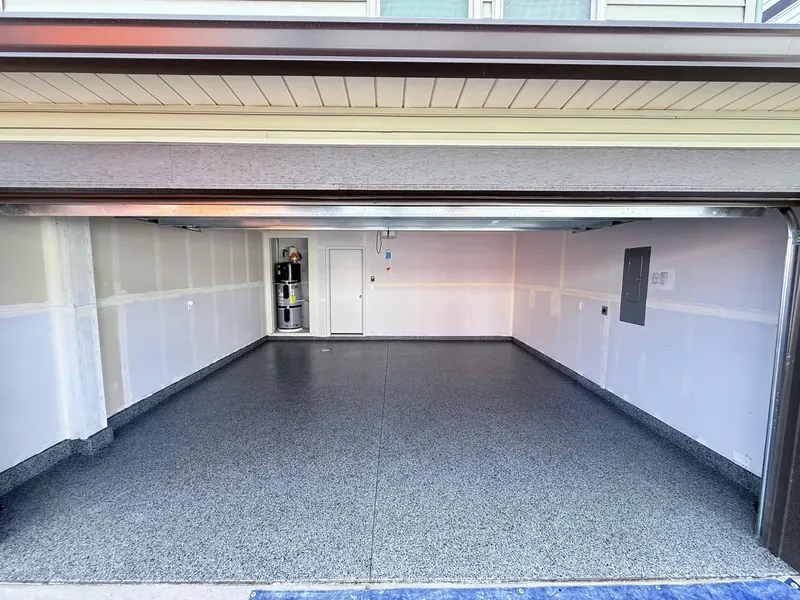
If you have typed "polyurea vs polyaspartic" into a search bar, you are probably a couple of quotes into a garage floor project and the words on the paperwork do not line up. One installer says polyurea. Another says polyaspartic. What you actually want to know is which one is better, and whether somebody is selling you the cheaper material under a nicer name.
Here is the short answer; the rest of this article is the long one. They are not rivals. They are two jobs on the same floor, and a good floor gives each job the chemistry that does it best. Rhino Coatings installs a polyurea base coat with a polyaspartic top coat. We do not install epoxy, and this article says so plainly wherever it matters. What follows is how we think about the two materials after putting them down, in that order, on a lot of concrete.
They are not opposites: polyaspartic is a polyurea
The confusion starts because one of these words names a family and the other names a member of it. Polyurea is the family: a class of resins made by reacting an isocyanate with an amine, which is textbook chemistry. Polyaspartic is one branch of that family. It is an aliphatic polyurea, and "aliphatic" is the word that will matter most in this article.
When somebody in this trade says "polyurea" with nothing else attached, they almost always mean the fast-set material that goes down as a base coat, and the polyureas used that way are typically aromatic formulations. When they say "polyaspartic," they mean the aliphatic, UV-stable material that goes on top. Same family, different formulation, different job. Aromatic polyureas react fast, bond hard, and yellow when daylight hits them. Aliphatic polyureas cost more and hold their color in the sun.
So the honest way to read a "polyurea vs polyaspartic" page is base coat versus top coat. Comparing them as rivals is like asking whether a house should have a foundation or a roof. It should have both, and you would not want to swap them.
What the base coat has to do
The base coat is the layer nobody ever sees and everything depends on. Here is its job description, item by item.
The job: become part of the concrete
We diamond-grind the slab first, to take off the weak cap and open the pores, and we fill the cracks and joints with polyurea. Then the base coat goes down wet on that ground surface, and it has to do four things at once. It has to bond to the concrete, not sit on it. It has to bridge the minor movement every slab goes through. It has to build enough thickness to give the floor a body. And it has to take the broadcast: flake or silica, thrown in by hand while the coat is still wet, to refusal, which means until the surface will not hold another handful.
Cure: fast-set, on purpose
A polyurea base coat is a fast-set material, and that is not a nice-to-have. It is the reason a one-day install exists at all. The base coat has to be down and ready for the broadcast inside a working window, then set hard enough to top-coat the same afternoon. A slow-curing base would push most garages to a second day for no benefit to the floor.
UV: not its job
Once the top coat is on, the base coat never sees daylight again. It is buried under the broadcast and the top coat for the life of the floor. So UV stability, the thing the aliphatic material brings to the floor, is simply not the base coat's job. The polyureas used as base coats are typically aromatic formulations. An aromatic polyurea would yellow if the sun ever reached it, and that does not matter under a floor, because the sun never will.
Flexibility: move with the slab
Concrete moves. It swells in summer, shrinks in winter, and in our part of the country it crosses the freezing line over and over from fall to spring. A rigid coating fights that movement and loses; the crack telegraphs straight up through the finish. Polyurea stays flexible through freeze-thaw, so the floor rides the slab instead of splitting across it. That is also why the crack and joint fill under the base coat is polyurea: the repair has to flex with the concrete it is repairing, just like the base coat above it.
What the top coat has to do
The top coat is the layer you live on. It has a different job description, and it needs a different material.
The job: lock it in and take the abuse
First it locks the broadcast in place, so the flake or silica becomes a solid surface instead of loose grit. Then it becomes the wear layer, and it is the layer that takes the hit: road salt and deicer dripping off the truck, oil, dropped tools, and hot tires. Hot-tire pickup is the failure that gave garage floor coatings a bad name. A warm tire parks on a soft coating, sits there overnight, and pulls it up in a tire-shaped patch when you back out. Resisting that is the top coat's job, and the bond the base coat made to ground concrete is what backs it up.
Cure: hours, not days
Polyaspartic cures in hours. You can walk on it in about 8 hours, and you can drive on it in about 72 hours. That is the timeline we give every customer, and it is what makes a one-day install worth having: the floor comes back to you quickly instead of sitting taped off for a week while a slow top coat hardens.
UV: this is where aliphatic earns its keep
An aromatic polyurea left in daylight yellows and chalks. A polyaspartic top coat is aliphatic, and it does not. The strip of floor that bakes in front of an open garage door every afternoon stays the same color as the back corner, year after year. If your garage door is ever open, the top coat has to be aliphatic. The difference does not show on install day; it shows once the sun has had time to work on it.
Flexibility: enough, and no more
The top coat has to flex enough to move with the base coat under it, or the two layers would separate over time, and it has to be hard enough to take tires, a dropped wrench, and a floor jack rolling across it. Polyaspartic sits in that middle. It is the harder of the two layers by design, and it is still part of a floor that moves as one piece.
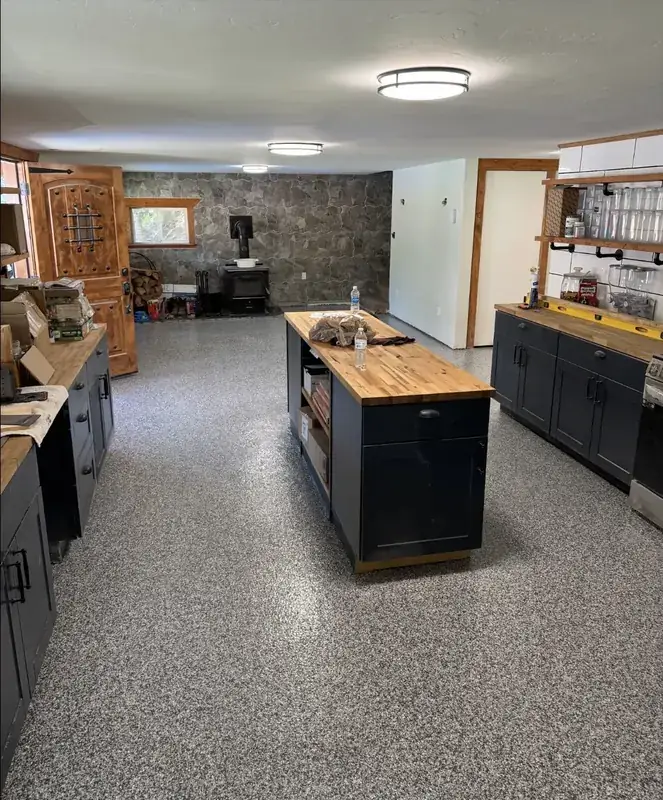
Flake under a clear polyaspartic top coat, indoors. The depth is the broadcast sitting in the base coat; the clarity and shine are the top coat.
Why one chemistry for both jobs is a compromise
You could build a floor out of polyaspartic from the concrete up. Some installers do. Look at what that buys you. The base coat is now a costlier product on a layer nobody will ever see. And you have paid for UV stability twice, once for a coat that is buried under the other one.
You could also build a floor out of an aromatic polyurea from the concrete up, base and top. It is fast, it bonds hard, and it would look great the afternoon we handed it back. Then the sun would come through the open door, and the top would yellow, then chalk, and there is no fixing that short of another top coat. An aromatic polyurea makes a fine base coat and a bad wear surface.
So the two-chemistry floor is not a marketing story where we get to say two long words instead of one. It is the cheaper build and the tougher build at the same time. Each material does the job it is good at, and neither is asked to do the job it is bad at. That is the whole argument, and it is the system we install. It is also why the question in your search bar has a wrong premise. The answer to polyurea vs polyaspartic is both, in that order.
How this plays out on your floor in a day
Here is the order on install day.
- Grind. We diamond-grind the slab to clean stock. No acid etching. Grinding takes off the weak cap, opens the pores, and leaves a surface the base coat can key into.
- Repair. Cracks and joints get filled with polyurea, so the repair flexes with the slab the same way the base coat will.
- Base coat. The polyurea base coat goes down wet across the whole floor.
- Broadcast. While the base is still wet, flake or silica is thrown in by hand to refusal, until the surface will not take any more.
- Top coat. The polyaspartic top coat goes on and locks everything in.
That is about a day for most garages. Walk on it in about 8 hours, drive on it in about 72 hours. The two chemistries are not just different buckets. They are different steps.
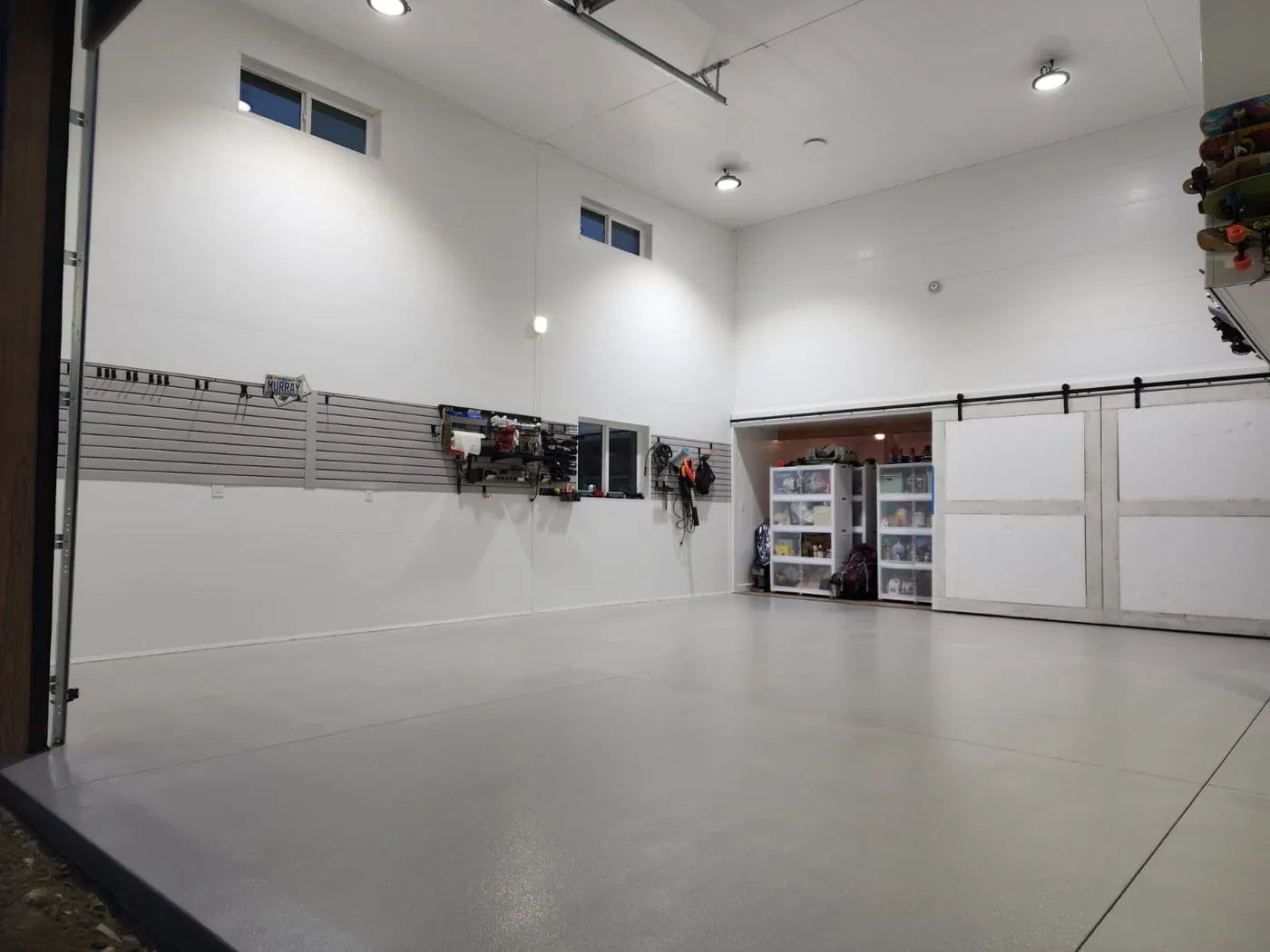
Silica instead of flake, in a tall shop with the door open. Same polyurea base coat, same polyaspartic top coat, one even color with a fine texture underfoot.
What to ask any installer
Not every floor sold as "polyurea" or "polyaspartic" is built the way we just described, and four questions will tell you whether yours is.
- Which chemistry is the base coat? You want polyurea, for the bond and the flex.
- Which chemistry is the top coat, and is it aliphatic? If the answer is not a clear yes, the floor will yellow wherever the sun reaches it.
- Do you grind, or acid-etch? Grinding is the answer. Etching is the shortcut, and the bond to the concrete is the whole ballgame.
- What does the warranty say about hot-tire pickup? If it is not named in writing, ask why. Our lifetime warranty, residential or commercial, names peeling, delamination, and hot-tire pickup.
Honest note: a good answer to these four questions matters more than the brand on the bucket. We have materials we trust, and so does every other installer worth hiring. A great product over an acid-etched slab, with a top coat that is not aliphatic, is a floor that fails. A solid product installed the way the chemistry wants is the floor you were picturing.
A note on epoxy
Epoxy is a different chemistry with its own uses, and this is not the article that compares it to polyaspartic. We do not install epoxy. If you want the full comparison, with the reasons we chose the system we did, it lives on our polyaspartic coatings page.
If you want the system laid out layer by layer, see the system on that page. If you are ready to put it on your own floor, get a free on-site measure and we will come look at the slab with you. Residential and commercial floors carry the same lifetime warranty against peeling, delamination, and hot-tire pickup.