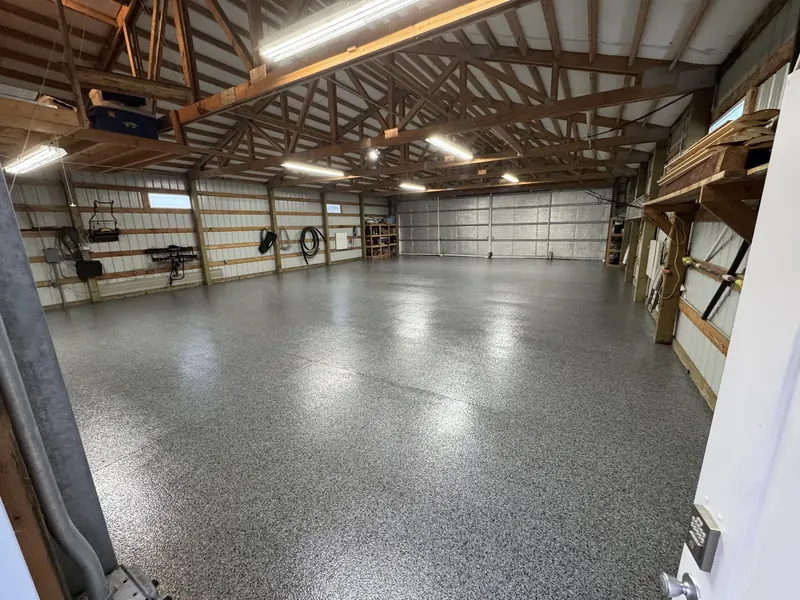
Shop and pole barn floor coatings
Rhino Coatings coats mechanic shops, pole barns, RV bays, hangars and woodshops in Coeur d'Alene, Spokane and Boise. Diamond-ground prep, a polyurea base coat and a polyaspartic top coat that resists hot tires, oil, diesel and hydraulic fluid, installed by our own crews.
Shop floor coatings at a glance
- Floors
- Shops, pole barns, RV bays and hangars
- Resists
- Hot-tire pickup, oil, diesel and hydraulic fluid
- Install
- 1 to 3 days for a large shop floor
- Walk on
- About 8 hours
- Drive on
- About 72 hours
- Warranty
- Lifetime, residential and commercial
- Price
- Fixed and written, after a free on-site measure
What a shop floor coating has to survive
A working floor takes more than a home garage ever will. Here is what it goes through, and how the system handles each one.
Hot tires
A truck or trailer that comes in hot can lift a weak coating right off the slab. The polyaspartic top coat resists hot-tire pickup, and the lifetime warranty names it.
Oil, diesel and hydraulic fluid
On bare concrete every drip becomes a permanent stain. On a sealed, non-porous coating, oil, diesel, hydraulic fluid and antifreeze sit on top until a rag gets to them.
Dropped tools and jack stands
The top coat is more abrasion-resistant than epoxy, so dropped wrenches, jack stands, creepers and dragged equipment mark it less.
Dust, sawdust and tire marks
A sealed slab stops shedding concrete dust onto your tools and projects, and a flake broadcast hides sawdust and tire marks between cleanings.
Snowmelt and wash-down
Equipment brings in snow, slush and road salt all winter. Salt and meltwater sit on the coating instead of soaking in, and silica grips better where the floor gets wet.
Cracks and worn slabs
Shop and pole barn slabs are often older, bigger and more worn than a home garage. They are diamond-ground and their cracks and spalls repaired before the base coat goes down.
Shops, pole barns, RV bays and hangars
- Mechanic and auto shops. Lifts, jack stands, hot tires and every fluid a vehicle carries. A flake floor wipes clean and brightens the bay.
- Pole barns and outbuildings. Tractors, trucks, toys and storage on a big slab. We coat the concrete floor of a pole barn the same way we coat a garage.
- RV bays and hangars. Oversize vehicles, hot tires and hydraulic fluid on a long, high-bay floor, coated in 1 to 3 days depending on the size.
- Woodshops and hobby shops. No more concrete dust in the finish, and sawdust sweeps off a sealed floor instead of grinding into it.
Running a business on the floor? Retail, restaurant and showroom floors are on our commercial floor coatings section, where we explain how we phase the work so you stay open. A garage that doubles as a shop belongs on our garage floor coatings page.
Flake or silica for a shop floor
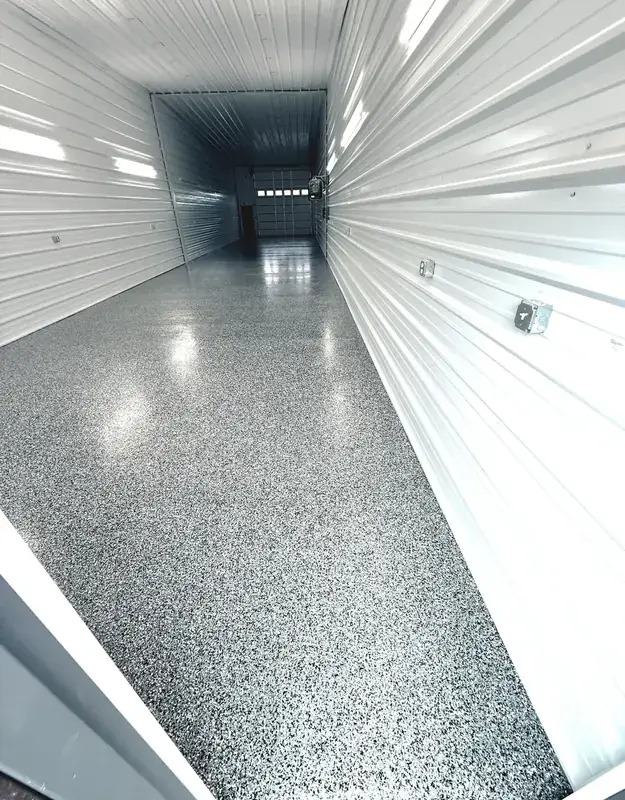
Both finishes sit on the same polyurea base and polyaspartic top coat; only the broadcast changes. Flake is the usual pick for a dry shop: it hides dust, sawdust and tire marks between cleanings. Silica has a finer, denser texture that grips better when wet, so we recommend it where equipment brings in snow or the floor gets washed down. Compare the 13 flake blends and the silica colors.
How we coat a shop floor
We schedule around your work and keep the downtime short.
- 01
Walk the shop
We measure the floor, check the slab for cracks, spalls, oil-soaked areas and old coatings, and set the schedule around your work. You get a fixed, written price.
- 02
Grind and repair
The slab is diamond-ground to open the concrete and remove old coatings and contamination, then cracks and control joints are filled with polyurea and spalls repaired.
- 03
Base coat and broadcast
A polyurea base coat goes down and flake or silica is broadcast by hand to full refusal for a dense, textured surface.
- 04
Top coat and back to work
A polyaspartic top coat seals it. Walk on it in about 8 hours, drive on it in about 72. Most garages take a day; a large shop, RV bay or hangar can take 1 to 3.
Badly cracked or spalled slabs get the full repair first; see our concrete repair page. We do not pour, lift or level concrete.
Shop and pole barn floor photos
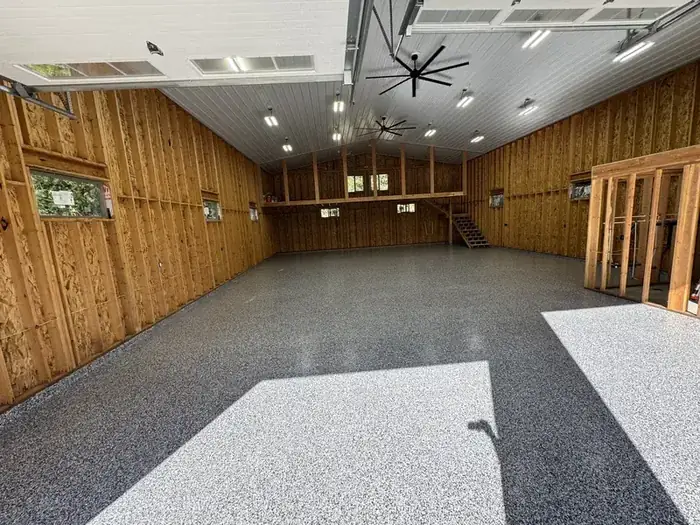
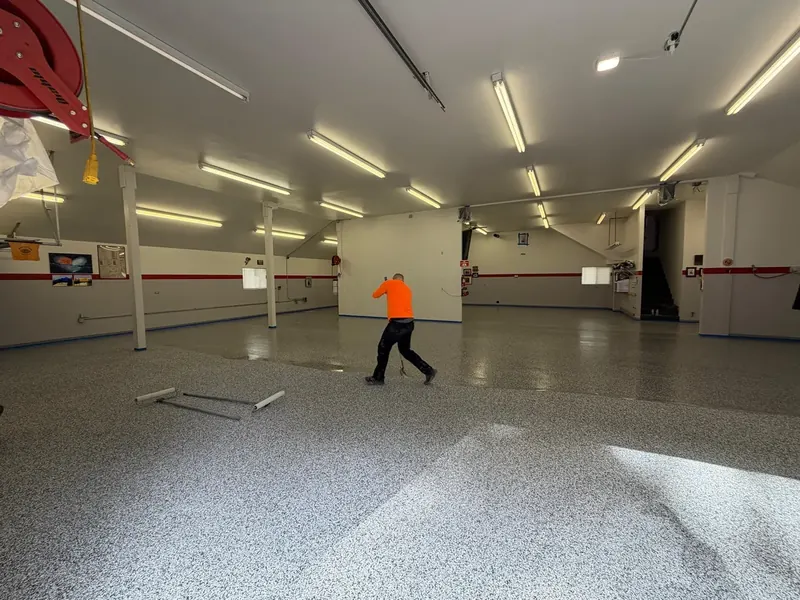
A shop, a pole barn, an RV bay and a crew at work. See more in our project photos.
Shop floor coating questions
What is the best floor coating for a shop?
A diamond-ground slab under a polyurea base coat, a flake or silica broadcast and a polyaspartic top coat. That is the system we put in every shop: it resists hot-tire pickup, wipes clean of oil and diesel, and the top coat is more abrasion-resistant than epoxy.
Can you coat a pole barn floor?
Yes, if it has a concrete slab. We grind and repair the pole barn slab, then coat it with the same polyurea and polyaspartic system we put in a garage. We do not coat gravel or dirt floors, and we do not pour new slabs.
Will a shop floor coating hold up to hot tires and fluids?
Yes. Hot-tire pickup is one of the failures the lifetime warranty names, and oil, diesel, hydraulic fluid and antifreeze wipe up from the sealed, non-porous surface instead of staining the concrete.
Is a coated shop floor slippery?
Not with a broadcast finish. Every floor gets a full broadcast of flake or silica for texture. Flake is the usual pick for a dry shop. Silica grips better when wet, so we recommend it where equipment brings in snow or the floor gets washed down.
How long does it take to coat a shop floor?
Most garage-sized shops are a one-day install. A large shop floor, RV bay or hangar can take 1 to 3 days, and we confirm the schedule at the free on-site measure. You can walk on it in about 8 hours and drive on it in about 72.
Can you coat over an oil-stained or previously coated shop floor?
Usually, yes. Old paint, epoxy and sealer are ground off completely, and contaminated concrete is ground back to a sound surface before the base coat. The rep checks how deep the contamination goes at the free estimate.
Do you install epoxy shop floors?
No. We install polyaspartic, not epoxy. The polyaspartic top coat is more abrasion-resistant, does not yellow, and gets a shop back in use faster.
How long does a shop floor coating last?
Rhino Coatings backs every floor it coats, residential or commercial, with a lifetime warranty against peeling, delamination and hot-tire pickup. We do not publish a number of years because how long any coating lasts depends mostly on prep, which is why every slab is diamond-ground and its cracks and joints filled with polyurea first.
How much does a shop floor coating cost?
It depends on the square footage, how much grinding and repair the slab needs, and whether you choose flake or silica. You get a fixed, written price after a free on-site measure.
More for your shop
Get a free floor coating quote
Tell us about your floor and we'll set up a free on-site measure. The rep checks the slab, shows you colors and gives you a fixed, written price. No high-pressure sales.
Or call 208-500-1043
The form takes about 45 seconds, and we'll text or email you within the hour. Phones answer Mon-Fri 8am-6pm, Sat 8am-4pm, Pacific time.
- Free measure
- Fixed price
- Lifetime warranty
- Veteran-owned and insured