Why epoxy garage floors fail in Northwest winters
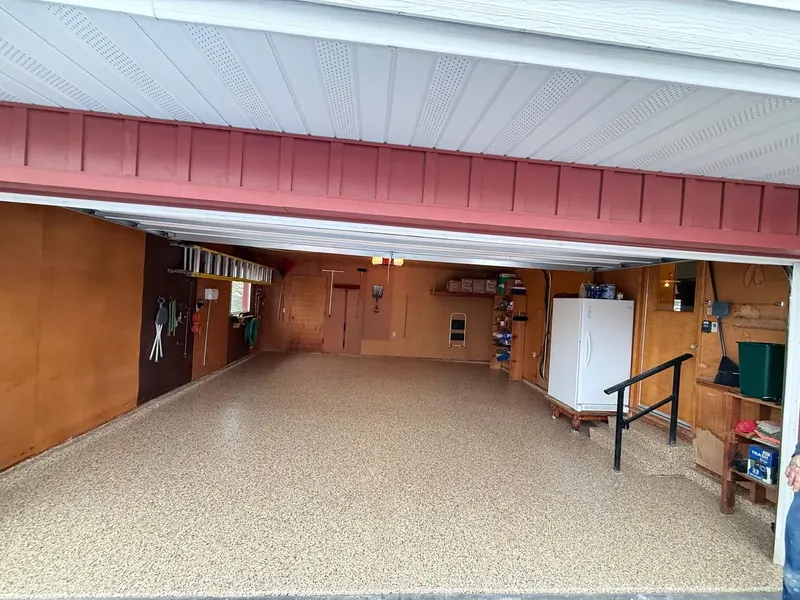
Most people who search this have watched it happen. A neighbor's epoxy floor that looked great the first summer is lifting in sheets by the second spring. Or it is their own floor: a weekend kit, rolled on carefully, now peeling in tire-shaped patches and flaking at the door where the snowmelt sits. The question underneath is a fair one. Is epoxy a bad product, or is something about this climate breaking it?
A little of both, and mostly the climate. A garage in the Inland Northwest asks more of a floor than a garage in a mild climate does, and epoxy happens to be weak in exactly the places this climate pushes. Rhino Coatings installs a polyurea base coat with a polyaspartic top coat. We do not install epoxy, so read this as the view of a company that chose something else, written to explain the failure you are looking at rather than to scare you off coating your floor.
What a Northwest winter does to a garage floor
Start with temperature. At Spokane International Airport, NOAA's 1991 to 2020 averages put January at a high of 34.5°F and a low of 24.7°F, and a normal winter brings about 45 inches of snow. Coeur d'Alene averages a January high of 36.2°F and a low of 26.2°F. Read those numbers the way a garage slab lives them. Through the heart of winter, the concrete near the door warms above freezing in the afternoon and drops below it overnight, again and again, for months.
Then add water and salt. Snow packs into the wheel wells and drops off as the truck warms up, so the floor gets a fresh puddle after every drive. What is in that puddle depends on the roads. Spokane County, for example, follows its plows with traction sand mixed with road salt and a granular deicer, and puts a liquid deicer on busier arterials when conditions call for it (Spokane County winter road maintenance). All of it rides home on the tires.
So a garage floor here lives through three stresses at once: a slab that expands and contracts with every freeze and thaw, standing water loaded with salt and grit, and long stretches when the concrete itself is cold. Summer adds two more, hot tires and sun through the open door. A floor that is going to last has to handle all five, not just the one that shows up first.
Where epoxy struggles
Epoxy is a good material for plenty of jobs. It is hard, it bonds well to clean concrete in a warm room, and it is affordable, which is why it is on the shelf at every hardware store. The trouble is that a Northwest garage is not a warm room, and each of the stresses above finds a weak spot.
A rigid film on a moving slab
Concrete moves. It grows a little in warm weather, shrinks in the cold, and every freeze and thaw works it again. Epoxy cures into a hard, rigid film, and a rigid film on a moving surface eventually loses that argument. Hairline cracks in the slab telegraph up through the coating, the edges of those cracks give water a way in, and once water gets under a coating and freezes, it pries the coating up from below. That is the flaking you see near the door and along the control joints.
A slow cure in a cold garage
Epoxy hardens through a chemical reaction, and like most chemical reactions it slows down sharply in the cold. In an unheated garage between fall and spring, the slab can stay cold for weeks at a time. A coating that cures slowly on a cold slab stays soft longer than the label suggests, picks up dust and footprints, and may never reach the hardness it would have reached in July. A weekend floor rolled on in October can be fighting the calendar from the first day.
Salt water at the edges
Most epoxy sold for garages, the kits especially, goes on thin, and kits usually rely on an acid etch rather than grinding to prepare the concrete. A thin film over etched concrete has a modest bond to begin with. Salt water finds the edges, the chips and the cracks, sits there through a freeze, and works the coating loose a little more with each cycle. By spring the damage shows as peeling patches in exactly the places where meltwater pooled all winter.
Hot tires in summer
When the weather turns, the problem flips. A tire that just came off a long run on warm pavement is hot, and a hot tire left on a soft coating can bond to it. When the car backs out, the tire pulls the coating up in its own shape. The trade calls this hot-tire pickup, and it is the failure that gave garage floor coatings their bad name. Thin epoxy over poorly prepared concrete is especially prone to it.
Sun at the door
Epoxy is not UV-stable. Daylight through an open door slowly turns it amber, so the strip of floor that gets the afternoon sun ends up a different color from the back of the garage. It is cosmetic, but it is permanent, and it tends to be the first thing people notice a couple of years in.
Moisture from below
One more culprit comes up rather than down. Concrete is porous, and a slab on damp ground can push moisture vapor up through itself. Under a coating that seals the surface, that vapor has nowhere to go, and it can lift the coating in blisters. It is one reason we look at the slab itself at the free on-site measure rather than quoting a floor sight unseen.
What holds up instead
The fix is not a thicker coat of the same thing. It is a system that gives each of those stresses a material built for it, laid on concrete that was prepared to hold it.
- Diamond grinding, not etching. Grinding takes off the weak top layer of the slab and opens it up, so the base coat bonds into the concrete instead of sitting on top of it.
- Polyurea in the cracks and joints. The repair stays flexible through freeze-thaw, so it moves with the slab rather than cracking open again.
- A polyurea base coat. Polyurea stays flexible in the cold. It builds the body of the floor, holds the flake or silica, and rides the slab's movement instead of fighting it.
- A polyaspartic top coat. It is UV-stable, so it does not yellow at the door, and it is chemical-resistant, so road salt and deicer sit on top until you rinse them off. It also resists hot-tire pickup.
That is the system we install, and the details, including how it compares with epoxy point by point, are on our polyaspartic floor coatings page. Polyaspartic cures in hours rather than days, which is a large part of why most garages are done in a day, and on a cold slab we confirm the timing before we start. You can walk on the floor in about 8 hours and drive on it in about 72 hours.
Getting any garage floor through winter
Whatever is on your floor now, coated or bare, a few habits cut the damage a long way.
- Get the meltwater out. A squeegee and a few minutes after a storm keep salt water from sitting on the floor for days.
- Rinse the salt rather than letting it dry. Dried deicer leaves a gritty white crust, and that grit scratches whatever it gets ground into. Water and a mild soap are enough.
- Lift the mats now and then. Containment mats catch a lot of water, but a mat that never moves keeps the floor under it wet all winter.
- Watch the threshold. The first few feet inside the door take the most water, salt and sun. Problems show up there first, so look there first.
If your epoxy floor is already failing
A peeling epoxy floor cannot be saved by rolling more epoxy over it, and it should not be coated over with anything else either. A new coating is only as strong as the layer underneath it, and a failing coating is the weakest layer there is. We do not coat over failed epoxy, we remove it. The old coating comes off with the same diamond grinding that prepares any slab, cracks and spalls get repaired, and the new system goes down on sound concrete.
If you are not sure what is on your floor now, or whether it is failing or just dirty, that is a normal thing to be unsure about. Old coatings, sealers and paint can look alike, and the free measure is a good time to have someone look at it with you.
Garage floor coatings across the Inland Northwest
We coat garage floors from our Coeur d'Alene shop across North Idaho and the Spokane area every working day, and from our Boise location across the Treasure Valley, where the slab still freezes and thaws through the winter. For the details in your town, see garage floor coatings in Spokane, Spokane Valley, Liberty Lake, Coeur d'Alene, Post Falls, Hayden, Sandpoint and Boise, or read how each layer of a garage floor coating goes down.
Residential and commercial floors carry the same lifetime warranty against peeling, delamination, and hot-tire pickup, in writing with a fixed price. The easiest next step is a free on-site measure: we look at your slab, show you colors on your own concrete, and tell you what it needs.