When can you coat a new concrete garage floor?
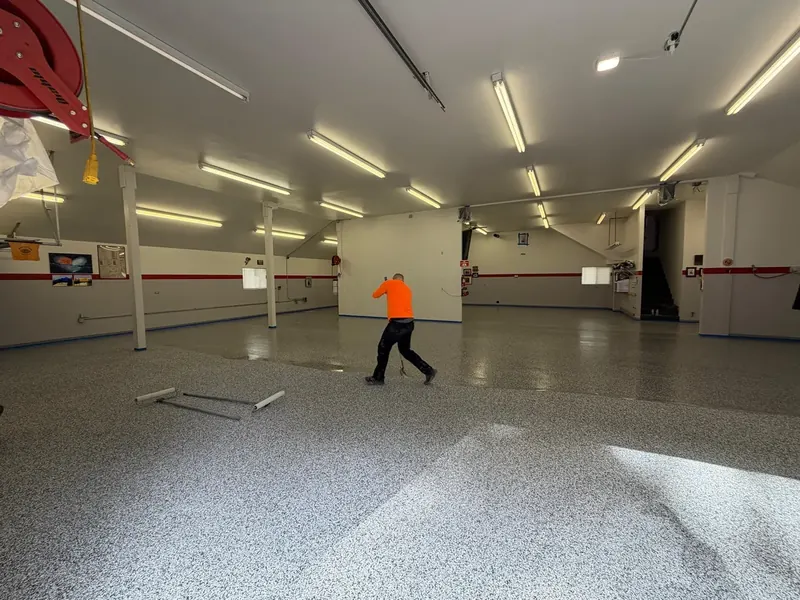
A new house comes with a garage floor that has never seen a car, and it is the best chance you will ever get to coat it. The garage is empty, nothing is bolted to the walls yet, and the concrete has no oil stains or salt damage to deal with. The first question almost everyone asks is how soon. The second is whether a brand-new slab even needs the prep a worn one does.
The short answers: not the week the builder pours it, and yes, it does. Rhino Coatings installs a polyurea base coat with a polyaspartic top coat. We do not install epoxy, and the timing and prep below are what we look at before we coat a new slab.
Why so many garage floors here are new
New concrete is everywhere in the towns we serve. Post Falls grew from 27,574 people at the 2010 census to 38,485 in 2020. Liberty Lake only incorporated in 2001 and is counted among the fastest-growing communities in Washington. In the Treasure Valley, Meridian went from 75,092 people in 2010 to 117,635 in 2020 and is considered Idaho's fastest-growing city. Every one of those new houses has a garage slab poured within the last few years, and in the newest subdivisions the concrete is only months old.
That is good news for a coating. A new slab has not had years of oil, road salt and freeze-thaw soaking into it. It just has to be ready, and it has to be prepared properly, which on a new slab is a little different from what most people expect.
Curing and drying are two different clocks
Concrete does not dry out to get hard. It hardens through a chemical reaction between cement and water called hydration, which keeps going for weeks after the pour. The strength a slab is specified at is usually measured at 28 days, and that is where the most common rule of thumb for coatings comes from: give a new slab about 28 days before anything goes on it.
Drying is the other clock, and it runs slower. A freshly poured slab holds a lot of water beyond what the hydration uses, and that extra water leaves through the top surface over months, faster in a warm, ventilated garage and slower in a cold, closed one. A coating seals that top surface. If too much moisture is still moving up through the slab when the coating goes on, it can collect underneath and push the coating off in blisters.
That is why the calendar is only a starting point. The real answer is the condition of your slab, and it is something we check at the free on-site measure before we schedule a new-construction floor. If the slab is ready, we set a date. If it needs more time, we tell you that rather than coating it anyway and hoping.
Pour dates, seasons and the slab you actually have
Two slabs poured on the same day can be ready at different times. Thickness matters, what is underneath matters, and so does the season. A slab poured in midsummer in a garage with the door open most days gives up its water quickly. A slab poured in late fall and then closed up in a cold garage through a North Idaho or Spokane winter dries slowly, sometimes much more slowly than the calendar suggests.
Two practical things help. First, ask your builder for the pour date, and keep it with your closing paperwork, because it is the first thing anyone coating the floor will want to know. Second, if you can, let the garage breathe in the weeks before the coating: door open on dry days, no tarps or stacked materials sitting flat on the slab. A cold slab can also lengthen the install day and the cure, so on cold-weather jobs we confirm the walk-on and drive-on timing before we start, or move the date.
What a builder's slab looks like up close
New concrete looks perfect, and that is part of the problem. The same things that make it look good are the things a coating cannot grip.
A smooth, dense finish
Garage slabs are usually power-troweled to a smooth, tight surface. It is easy to sweep and it sheds water, and it is also too closed for a base coat to bond into. We diamond-grind every slab, new ones included, to open that surface, so the polyurea base coat bonds into the concrete instead of sitting on top of it. A coating rolled onto a slick builder finish is the one most likely to peel.
Curing compounds and sealers
Many concrete crews spray a curing compound or a cure-and-seal product on fresh concrete to slow evaporation while it hardens. It does its job for the concrete, and then it stays on the surface as a film that a coating will not stick to. Grinding takes it off along with the rest of the top layer. If you know what your builder used, mention it at the measure.
Control joints and early cracks
The straight cuts across a new slab are control joints. They are there so the concrete cracks where it is told to as it shrinks, and many new slabs also show a few hairline shrinkage cracks in their first months anyway. Neither one is a reason to panic. We fill cracks and joints with polyurea before the base coat goes down, so the repair flexes with the slab through freeze-thaw instead of cracking back open under the finished floor.
Construction dust and traffic
A new garage also takes a beating before anyone moves in: drywall dust, paint drips, trades rolling equipment across it. None of that is a problem for a coating, because grinding takes the surface back to clean concrete. It is a reason to coat after the messy trades are done, not before.
Where the floor fits in your move-in plan
Once the slab is ready, the coating is about a day for most garages, and the easiest time to do it is before the garage fills up.
- Before the boxes and shelving. An empty garage means nothing to move and no corners left uncoated behind a freezer or a workbench.
- Before the cabinets. If you are adding garage cabinets too, the floor goes down first, so the cabinets stand on a finished floor. Our garage cabinets are installed by our own crews once the floor is done.
- Before the cars move in. You can walk on the floor in about 8 hours and drive on it in about 72 hours, so plan on parking in the driveway for three days.
If the house is still under construction, it is worth telling your builder or project manager that the garage floor will be coated, so nobody seals the slab or stores materials on it in the last weeks before closing.
Picking a finish while the garage is empty
An empty garage is also the easiest place to choose a color, because you can see the whole floor in its own light. We bring the samples to your garage: flake blends, which give the floor its speckled look and some texture underfoot, and silica, which reads as one even color and has a fine texture that grips well when wet. Both go into the same polyurea base coat under the same polyaspartic top coat, so the choice is mostly about how you want the floor to look and feel underfoot.
It helps to look at the samples at more than one time of day if you can. A color that reads warm under the overhead lights at night can look quite different with the door open in the afternoon, and the floor will spend time in both.
Questions to ask any installer about a new slab
- Will you look at the slab before you schedule? A quote for a new floor should come after someone has seen the concrete, not before.
- Do you grind or etch? On a new, dense slab especially, grinding is the difference between a coating that bonds and one that peels.
- What happens to the control joints? Ask whether they get filled and how the coating is finished over them.
- What does the warranty say in writing? Look at the failures it names, not just how long it lasts.
An older slab is welcome too
Not every garage floor we coat is new, of course. Slabs in older neighborhoods often carry decades of oil, cracks and salt damage, and they get the same grind and repair before the coating, just more of it. The difference with a new slab is mostly the waiting at the start, not the work.
New-construction floors in the towns we serve
Our Coeur d'Alene shop coats new and older garage floors across North Idaho and the Spokane area, including Post Falls, Liberty Lake, Spokane Valley, Hayden and Coeur d'Alene. Our Boise location covers the Treasure Valley, including Meridian, Nampa, Eagle and Boise. How each layer of a garage floor coating goes down is laid out on our garage floor page.
Residential and commercial floors carry the same lifetime warranty against peeling, delamination, and hot-tire pickup. Once your slab is poured, book a free on-site measure and we will tell you when it is ready and what it needs.